
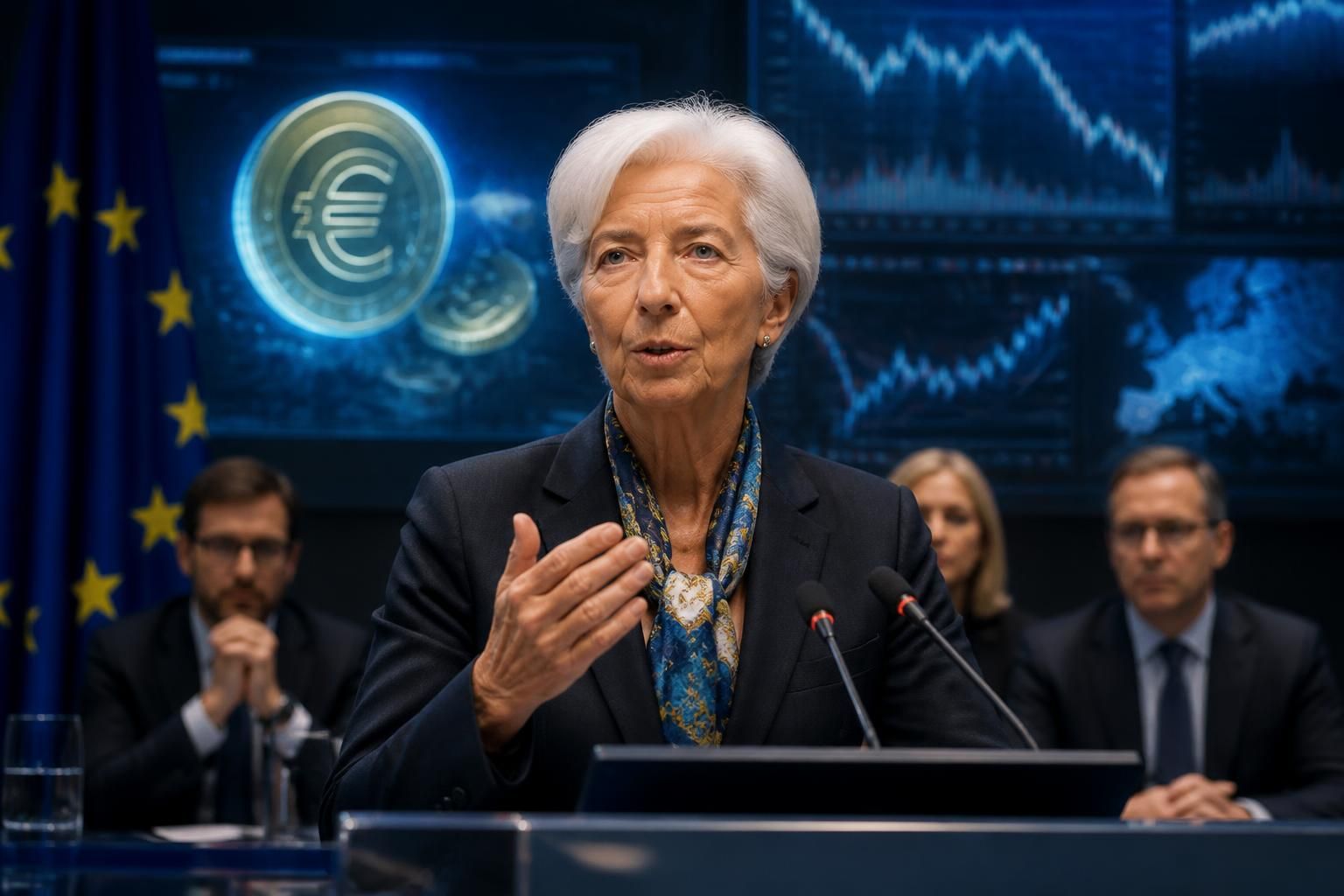
European Central Bank (ECB) President Christine Lagarde recently delivered a firm message on the future of Euro stablecoins, emphasizing their potential risks to financial stability while contrasting the European approach with the prevailing US model. Her perspective highlights concerns about the growing adoption of private stablecoins, underlining the importance of a regulated and sovereign digital currency in the form of the Digital Euro.
Lagarde pointed out that although stablecoins offer technological innovation and broaden access to stable currency, they simultaneously blur critical lines between monetary sovereignty and private tech tools. This dual role creates risks like the loss of the peg value, bank deposit outflows, weakening of monetary policy transmission, and increased fragmentation in payment systems. The issues she raised come as stablecoins like USDT and USDC dominate a global market exceeding $310 billion, showing their expanding influence but also raising regulatory and financial stability alarms.
The ECB president stressed that Europe’s ambition should not be to mimic the US stablecoin model, which, while facilitating innovation, risks allowing private players to challenge monetary sovereignty. Instead, by promoting a centrally controlled Digital Euro, the ECB aims to provide a secure, efficient, and sovereign alternative, capable of supporting Europe’s monetary autonomy and financial integrity in the crypto era.
How Christine Lagarde’s ECB Views Shape the Future of Euro Stablecoins and the Digital Euro
Christine Lagarde’s recent speech in Spain sharpened the ECB’s guarded stance on Euro-denominated stablecoins. Her skepticism is rooted in the belief that while these stablecoins ease access to payment and settlement functions in tokenized markets, their combined monetary and technological roles raise systemic risks. Separating these two functions, she argues, weakens the case for promoting Euro stablecoins.
Her concerns include the risk of stablecoins losing their peg to the Euro during market stress, triggering bank deposit outflows that could destabilize the banking sector. Additionally, such stablecoins could impact how monetary policy is transmitted across the economy, potentially weakening the ECB’s influence. The fragmentation of payment and settlement infrastructures could also undermine financial ecosystem cohesion in Europe.
The Digital Euro initiative thus represents ECB’s strategic response, aiming to build a sovereign, central-bank-issued digital currency that blends monetary stability with technological innovation, sidestepping risks posed by private stablecoins. This vision ensures that Europe’s digital currency future remains firmly under public control, avoiding the pitfalls observed in other jurisdictions.
Stablecoins Versus Central Bank Digital Currencies: The Risk Landscape
While private stablecoins like USDT and USDC today enjoy widespread use, their embedded risks of regulatory uncertainty, issuer dependency, and potential liquidity crises remain front and center. Lagarde’s criticism extends to the belief that replacing stablecoins with central bank digital currencies (CBDCs) won’t necessarily remove systemic risks. Instead, a CBDC potentially heightens centralization by consolidating payment infrastructures directly under the bank’s control.
Stablecoins do preserve some plurality by operating on multiple blockchains and being tradable on open markets. This pluralism provides market participants with choices and flexibility absent in a pure CBDC regime. However, stablecoins rely on private issuers and regulatory frameworks which can create vulnerabilities if mismanaged.
Lagarde’s call for a cautious but firm approach urges regulators and innovators to consider a digital Euro framework that balances innovation benefits with risk mitigation. This approach is underlined by the evolving global landscape where digital currencies play increasing roles in finance, payments, and cross-border settlements.
Emerging Trends in Regulation and Adoption of Euro Stablecoins in a 2026 Context
In 2026, the dialogue around digital currencies in Europe has intensified, with regulation evolving to tackle financial stability risks posed by stablecoins. Initiatives like digital Euro projects and public-private partnerships aim to sculpt a secure infrastructure for tokenized assets and payments. The ECB closely monitors expanding markets, ensuring that Euro stablecoins do not undermine the traditional banking system or monetary policy.
Meanwhile, the US continues leveraging stablecoins as a financial innovation driver, but concerns about cross-border risk spillovers and dollar dominance remain hot topics. Europe’s measured approach, relying on central bank emission and sovereignty, appeals to policymakers seeking stability without stifling growth.
Innovative European projects such as Qivalis’s Euro stablecoin pilot and tokenized fund platforms demonstrate growing momentum for regulated alternatives that harmonize with ECB policy goals. Integrating these efforts with rigorous oversight is key to converting the promise of cryptocurrency technology into sustainable finance infrastructure.
Impact of Euro Stablecoin Risks on Cryptocurrency Markets and Monetary Policy
As the Eurozone grapples with rapid digital transformation, the risks highlighted by Christine Lagarde underline the delicate balance that regulators must strike. Cryptocurrencies broadly benefit from increased regulatory clarity, yet stablecoins present complex challenges given their hybrid nature between currency and technology.
Financial stability concerns revolve around potential sudden redemptions from stablecoins that could induce liquidity crunches, destabilize banks, or impede monetary policy transmission. This scenario compels the ECB to foster a digital Euro that acts as a reliable anchor, safeguarding market participants while evolving the payments landscape.
The tension between innovation and prudence is apparent in the market dynamics, where cryptocurrencies like Bitcoin present an alternative not pegged to fiat currencies and decentralized beyond central banks’ influence, adding a third dimension to the evolving monetary ecosystem.
To navigate these complexities, staying informed and engaged with emerging regulations and market trends is crucial. Enthusiasts and new entrants to the cryptocurrency space should understand how the ECB’s cautious stance influences Euro stablecoin acceptance and the growth of sovereign digital currencies.
For further insights on regulation and ecosystem developments, readers may find valuable resources at crypto-debut.com, which regularly covers cryptocurrency regulation and central banking updates, essential for navigating this transformative period.