
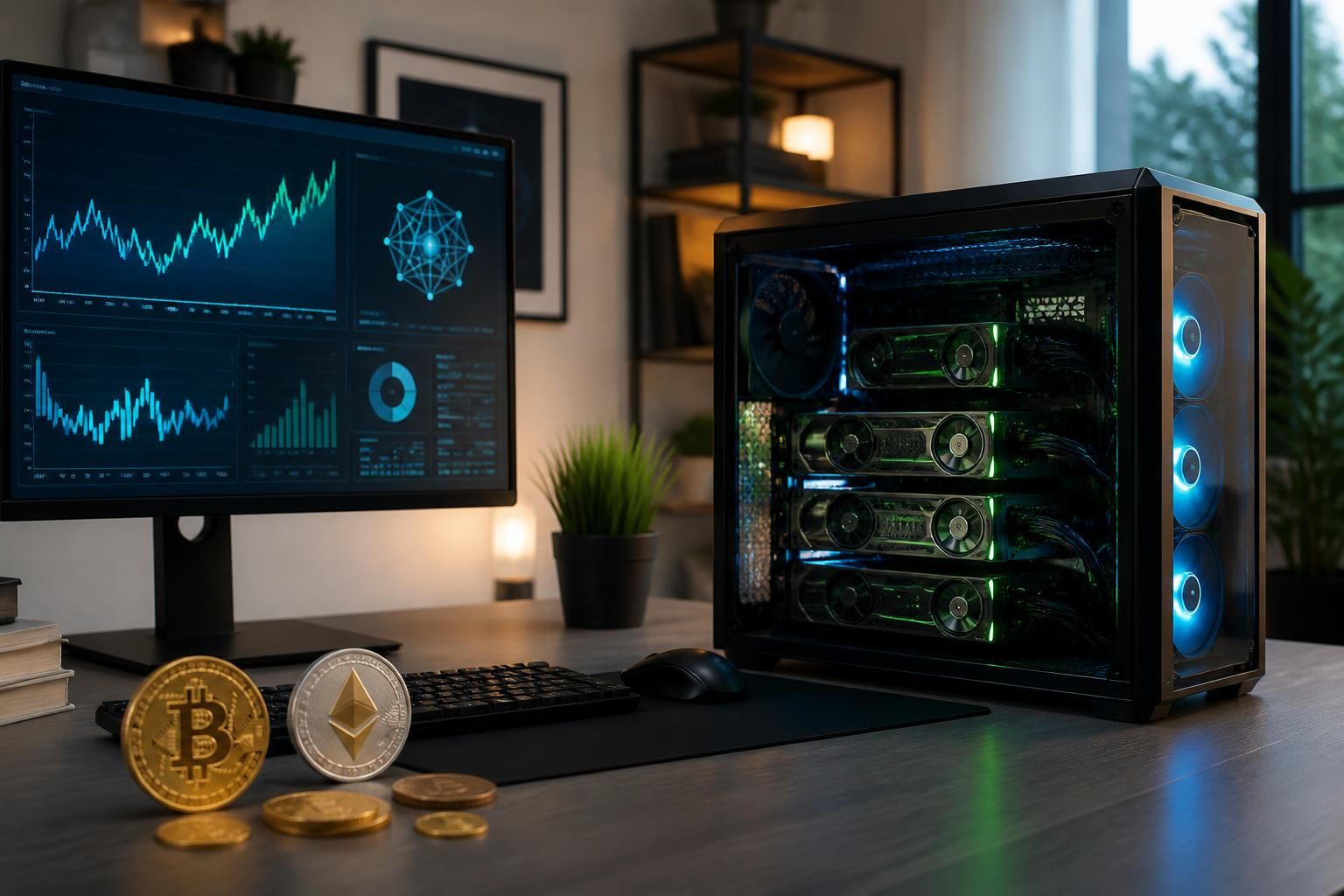
Every 10 minutes, the cryptocurrency world witnesses the creation of a new Bitcoin block—a process known as crypto mining. For those stepping into this digital frontier, mining might appear complex or even daunting. Yet, it’s crucial to the very existence and security of cryptocurrencies like Bitcoin and Ethereum. Mining acts as the backbone that validates transactions, secures the blockchain, and releases fresh coins into circulation. In today’s rapidly evolving crypto landscape, understanding mining unlocks not just the mechanics but also opportunities to participate in this decentralized revolution. From choosing the right hardware such as Bitmain’s Antminer or MicroBT machines, to deciding between solo or pool mining with platforms like F2Pool or Hive Blockchain, newcomers have more tools and options than ever. This guide will illuminate mining’s essentials, demystify common terms, highlight key strategies, and show you how to dive in safely and confidently with practical insights for 2025 and beyond.
In brief: Crypto mining is the process of validating transactions and securing blockchains to release new coins. Miners use powerful hardware like Antminer and Avalon devices, competing in networks maintained by pools such as F2Pool. Mining rewards fluctuate with difficulty and market conditions, making energy costs and mining method choice crucial. Options range from solo mining with ASICs to cloud mining services like Genesis Mining and Hashflare, offering varying levels of involvement and risk. Beginners are encouraged to build knowledge through trusted resources and start small, using secure wallets and reputable mining pools to ensure safety and profitability in 2025.
Understanding Crypto Mining: The Foundation of Blockchain Security
At the heart of every cryptocurrency lies blockchain technology, a decentralized ledger that records transactions securely and transparently. Crypto mining is the process that enables this technology to function by verifying and adding new transaction blocks. Unlike traditional banking systems controlled by central authorities, mining distributes trust across a global network of miners.
Miners solve complex mathematical puzzles using computational power from devices like the Bitmain Antminer or Canaan Avalon ASICs. The puzzle involves finding a specific cryptographic “hash” that meets network criteria, essentially winning a lottery to add a block. The process is governed by Proof-of-Work, ensuring blocks are difficult to forge and securing the entire blockchain. Without mining, digital coins could neither be issued nor trusted, demonstrating why mining underpins the entire cryptocurrency ecosystem.
Why Mining is Essential for Cryptocurrency Longevity
Mining not only creates new coins but also validates transactions, preventing fraud such as double-spending. This decentralized validation model allows cryptocurrencies to operate without banks or governments, giving power and control back to users. As mining difficulty adjusts based on network participation, it balances security with accessibility, though the competition intensifies with rising miners and technological advancements.
Platforms like Hive Blockchain and mining pools such as F2Pool exemplify collaborative efforts that distribute mining power and rewards fairly, making participation feasible for individuals who lack resources for solo mining with expensive rigs.
How Crypto Mining Works: Step-by-Step Process Explained for Beginners
Mining operates like an ongoing lottery where miners race to solve a cryptographic puzzle first. Each block contains a batch of transaction data, and miners use algorithms to guess a valid nonce – a number that produces a hash value below the target set by the network. When a miner succeeds, the new block is broadcast, verified by others, and added to the blockchain.
Mining rigs based on GPUs or specialized ASIC devices like those from MicroBT deliver the computational power to tackle these puzzles efficiently. Some miners rent computing power through cloud services such as Genesis Mining or Hashflare, avoiding hardware management entirely.
Solo Mining Versus Pool Mining: Choosing Your Mining Path
Solo miners contribute their own hardware and compete independently for the full block reward. This method demands significant investment in high-performance rigs and power but offers the thrill of exclusive earnings. On the other hand, pool mining combines the power of many miners, sharing rewards proportionally, which provides steady income and lowers entry barriers.
Mining pools such as F2Pool offer lower fees and reliable payouts, ideal for beginners seeking consistent returns. While solo mining with ASICs like Bitmain’s Antminer series is powerful, joining a pool often offers better risk management for newcomers.
Mining Hardware and Software: What You Need to Start
Choosing the right equipment is paramount. ASIC miners from Canaan Avalon, MicroBT, and Bitmain dominate Bitcoin mining, offering unmatched speed and energy efficiency but demanding hefty upfront costs. GPU rigs provide flexibility for mining diverse coins like Ethereum or smaller altcoins, making them popular among hobbyists.
Your mining hardware must be paired with suitable software, such as CGMiner or EasyMiner, to communicate with the chosen mining pool and your wallet. Secure wallets from trusted providers, like Coinmine, are essential for storing earned cryptocurrency safely.
Energy and Profitability Considerations
Mining is energy-intensive. Electricity costs significantly impact profitability, making location a vital factor. Regions with cheap, renewable energy unlock better returns. Cloud mining offers an alternative by outsourcing mining infrastructure, but beware of providers; only reputable outfits like Genesis Mining or Hashflare should be trusted.
Mining rewards halve periodically—Bitcoin’s block rewards have dropped from 50 BTC in 2009 to 3.125 BTC in 2025. Increasing mining difficulty and lower rewards challenge profitability, requiring miners to optimize operations continually.