

In the fast-evolving world of digital finance and technology, blockchain stands out as a groundbreaking force set to redefine how information and value are exchanged globally. Since its inception alongside Bitcoin in 2009, this decentralized ledger technology has evolved far beyond its original purpose. Today, blockchain carries the promise of revolutionizing not just cryptocurrency but also industries like healthcare, supply chain, and voting systems. For beginners stepping into the cryptocurrency space, mastering blockchain basics is not just an option but a vital step toward confidently navigating and participating in this digital revolution.
With giants like Ethereum and Cardano pushing the boundaries of smart contracts and decentralized applications, and platforms like Coinbase, Binance, and Kraken facilitating easier access, understanding the foundational mechanics of blockchain makes your entry into cryptocurrencies more strategic and rewarding. The power of blockchain lies in its transparency, security, and immutability—attributes essential in an era where digital trust is paramount. Beyond the technical jargon, grasping these core concepts arms beginners with the knowledge to safely buy their first Bitcoin, explore tokens like Ripple, and securely manage assets through tools such as Ledger and MetaMask wallets. This guide will open the door to a world where blockchain is not just technology but a catalyst for change.
Unlocking the Power of Blockchain: Essential Concepts for Beginners in 2025
At its core, blockchain is a distributed ledger technology that records transactions seamlessly across a network of computers known as nodes. Unlike traditional databases, which centralize data and require trust in a single authority, blockchains distribute copies of the ledger to ensure transparency and security. Every transaction is grouped into a block, cryptographically linked to the previous block, forming an immutable chain—hence the term blockchain. This means once recorded, information cannot be altered without consensus from the network.
Understanding this process helps beginners appreciate why blockchains like Bitcoin and Ethereum are so secure and resilient. For example, when you use apps like MetaMask or Ledger wallets to manage your digital assets, you’re interacting with this complex but robust network. Each transaction passes through validation steps, often called ‘mining’ or ‘staking’ depending on the blockchain, which ensures only legitimate entries are added. This decentralized validation mechanism removes the need for trusted third parties, reducing costs and human error while increasing trustworthiness.
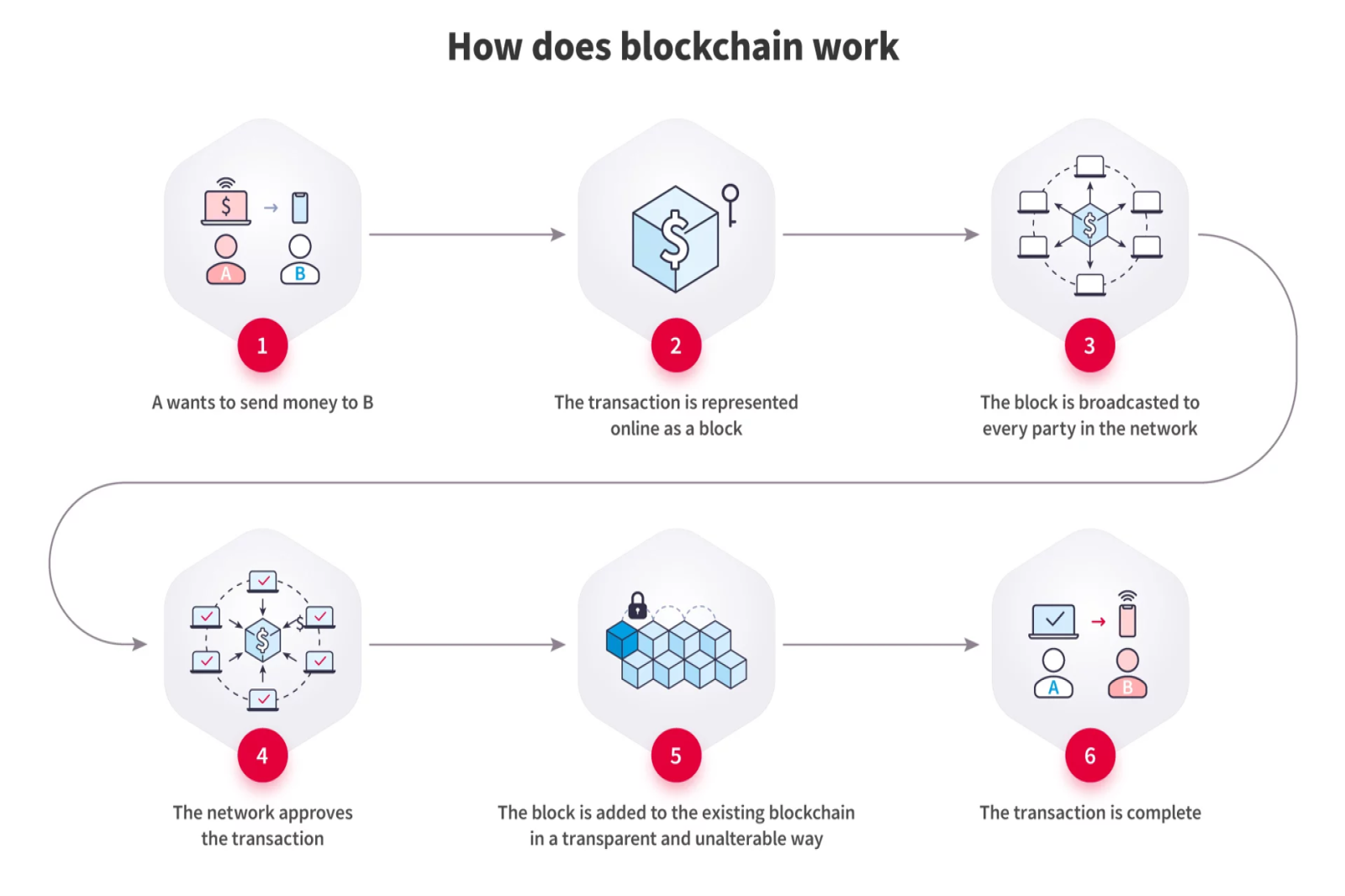
How Transactions Flow on a Blockchain and Why It Matters
When you initiate a cryptocurrency transaction, for example sending Bitcoin through platforms like Kraken or Binance, it enters a process unique to blockchain technology. Transactions queue up in a memory pool awaiting validation by miners or validators. Miners, equipped with powerful computing resources, race to solve complex cryptographic puzzles in a proof-of-work system (like Bitcoin’s) or are selected randomly in proof-of-stake mechanisms (like Ethereum’s upgraded network). This competing and confirming process secures the data and propagates the transaction into a new block added to the blockchain.
This process, which demands significant computational effort, explains why Bitcoin transactions take about ten minutes for initial confirmation. However, other networks implementing different consensus methods facilitate near-instant transaction settlements. This efficiency is vital for uses beyond currency transfer—such as secure contracts on Cardano or data integrity in supply chain solutions experimented by companies like IBM and Walmart.
Decentralization and Transparency: Building Trust Without Middlemen
Decentralization is the cornerstone of blockchain’s revolutionary potential. Instead of a single centralized database, blockchain’s data is spread across many nodes worldwide. If one node tries to alter transaction records, others will reject the changes since their copies won’t match. This ensures an unprecedented level of security and trust without relying on intermediaries such as banks or auditors.
Moreover, public blockchains like Bitcoin and Ethereum operate with full transparency. Anyone can peer into the ledger through blockchain explorers, tracking transactions openly while maintaining user anonymity via encrypted addresses. This openness has novel implications—not only can you trace every Ripple payment or Ethereum contract execution, but you also gain confidence that the network remains free from fraud or tampering.
Blockchain Security: Why It’s Almost Unbreakable
Blockchain security derives from its cryptographic foundations and distributed nature. Once a block is verified and linked to the chain, altering it would require changing every subsequent block and gaining control of the majority of the network’s computational power—a feat nearly impossible on large networks like Bitcoin and Ethereum as of 2025. This security model protects users and storage platforms from hacks that typically plague centralized systems.
However, beginners should also recognize risks in smaller or emerging blockchains, where less computational power makes ‘51% attacks’ possible. That’s why prominent exchanges such as Coinbase and Binance encourage trading on well-established networks and advise securing assets in reliable wallets like Ledger or MetaMask.
Blockchain’s Expanding Horizons: More Than Just Cryptocurrency
While cryptocurrencies such as Bitcoin and Ethereum propelled blockchain technology into the spotlight, its applications have stretched into several industries. From healthcare providers securely managing patient records to supply chains ensuring product authenticity, blockchain’s immutable and transparent nature unlocks incredible potential.
Look at Ripple’s role in streamlining cross-border payments or Cardano’s blockchain for voting systems that reduce election fraud and boost participation. Companies worldwide are embracing blockchain to replace outdated, costly processes with automated, efficient smart contracts and transparent record-keeping. This surge in implementation offers beginners compelling reasons to learn blockchain basics now—arming themselves with knowledge that’s increasingly relevant across multiple sectors.
For those ready to start their journey, exploring foundational guides such as beginner cryptocurrency guides or diving into a glossary of crypto terms provides indispensable clarity. Reliable resources also help understand how to safely store cryptocurrencies using tools like Ledger or MetaMask and make informed decisions when choosing to buy your first cryptocurrency.