
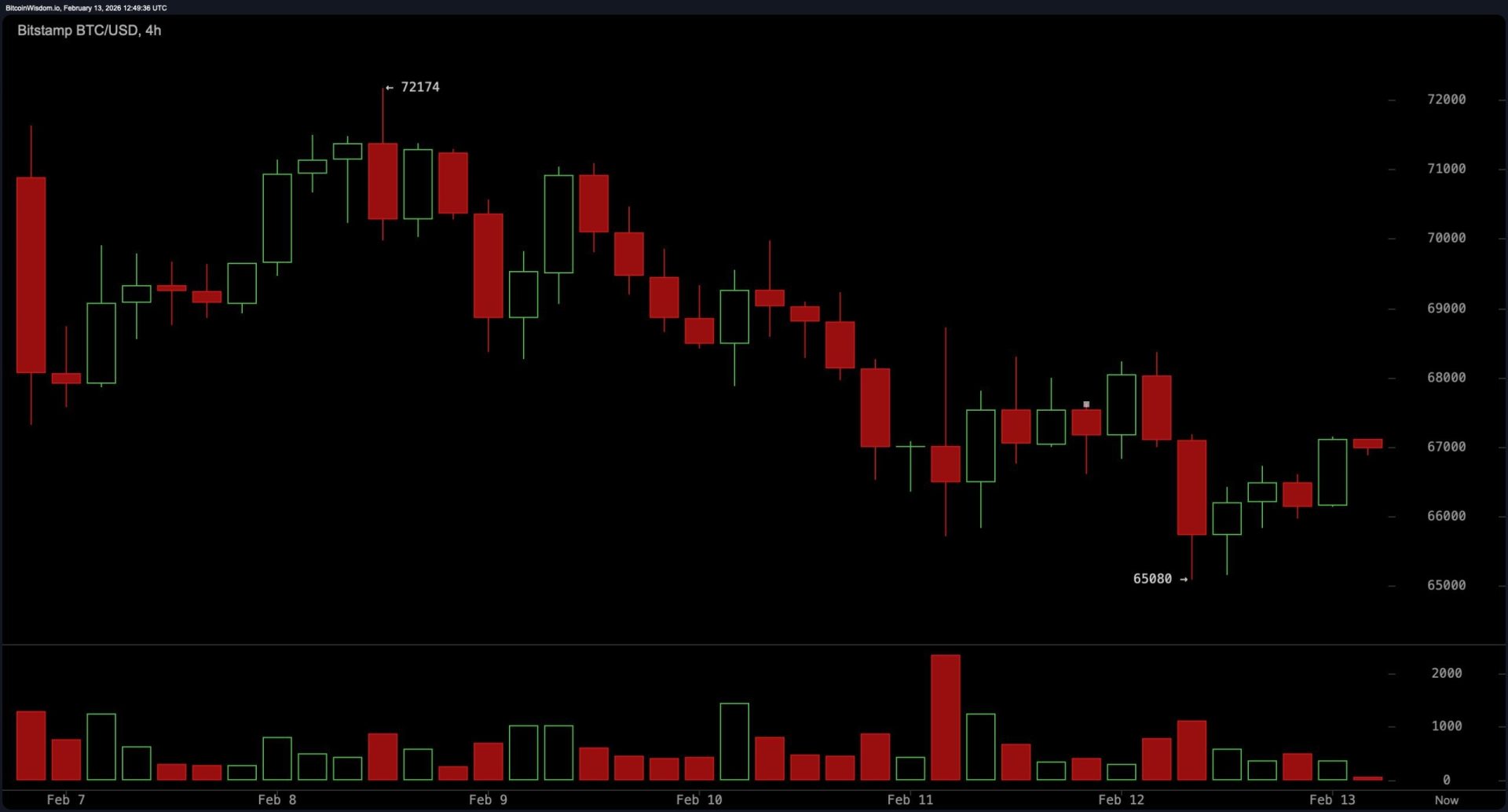
In the early hours of the 23rd of February 2026, Bitcoin (BTC) experienced another downturn, slipping back below the pivotal $65,000 mark. This price dip follows a trend that’s been unsettling the cryptocurrency market for several months, reflecting a broader phase often described as a bear market. Despite the decline, which saw Bitcoin hit a low of approximately $64,300 before slightly rebounding to trade around $65,110, the atmosphere remains charged with cautious energy among investors and crypto traders alike.
This fresh stumble is part of a broader storyline in which BTC has retreated over 48% from its all-time high reached in October. The recent price drop, quantified at around 4.2% in 24 hours, may seem typical within the volatile rhythm of digital currency trading, yet the chart patterns indicate subtle signals of a prolonged market correction rather than a sharp collapse. The influence of macroeconomic factors looms large, with particular attention drawn to renewed tensions surrounding U.S. tariff policies, which have seen a recent increase of 15% after prior legal setbacks, creating ripples throughout the market.
What’s Driving Bitcoin’s Price Drop Below $65,000?
The movement of Bitcoin’s price below $65,000 isn’t isolated but part of a larger narrative impacting the entire cryptocurrency sector. The total crypto market cap has shrunk by about 4% within the last day, settling near $2.309 trillion. Within the top ten cryptocurrencies, while most have experienced declines around 4 to 5%, Solana’s SOL tokens fell sharply by about 8.4%, signaling that this is a widespread market tremor rather than a BTC-specific issue.
This broad-based decline also affected Cardano (ADA), which recently dropped out of the top ten, supplanted by Bitcoin Cash following a 5% fall. Interestingly, crypto liquidations — particularly in derivatives — remain relatively measured, with just under half a billion dollars ($468 million) in forced closures over the past 24 hours, emphasizing the market’s still-balanced tension. Most of these liquidations occurred overnight during Asian trading hours, suggesting global market dynamics are at play.
Market Signals Suggest Continued Volatility Ahead
As Bitcoin treads this fragile ground, important indicators like its realized capitalization — which measures the value of coins based on their last movement price — have been declining since late January. Currently, this indicator rests around $1.095 trillion, pointing to substantial capital outflows and underlining the seriousness of the ongoing market vulnerability. For newcomers to crypto trading, such metrics are valuable guides to understanding when the market might be poised for stabilization or further correction.
While no dramatic news triggered this particular dip, the overarching macroeconomic backdrop—including geopolitical tensions and policy shifts—continues to act as catalysts for these market fluctuations. Such external pressures often exacerbate price movements in the digital currency space, where sentiment plays a pivotal role. Those exploring the market now might find it helpful to revisit strategies like dollar cost averaging or to educate themselves further about why Bitcoin remains a resilient asset despite sporadic setbacks, details on which can be found in resources such as why Bitcoin is considered a safe haven and guidance on how to buy Bitcoin wisely.
Understanding Bitcoin’s Bear Market: Lessons for Emerging Crypto Investors
Enduring a bear market can be a challenging period for anyone involved with cryptocurrencies. Historically, such phases are characterized by gradual declines spread over months, testing the patience and conviction of investors. The current correction phase, where BTC has lost nearly half of its peak value attained last year, aligns with typical bear market behavior observed in the crypto world before eventual rebounds occur.
Importantly, Bitcoin’s robust blockchain fundamentals and its pioneering role in the cryptocurrency arena continue to make it an asset worth monitoring closely. While its price dips are uncomfortable, they are also windows of opportunity for beginners to deepen their understanding and adjust their investment strategies accordingly. Comprehensive analyses and forecasts for Bitcoin’s trajectory can be explored further through detailed studies like the Bitcoin forecast for 2026 to navigate this volatile landscape with confidence.