
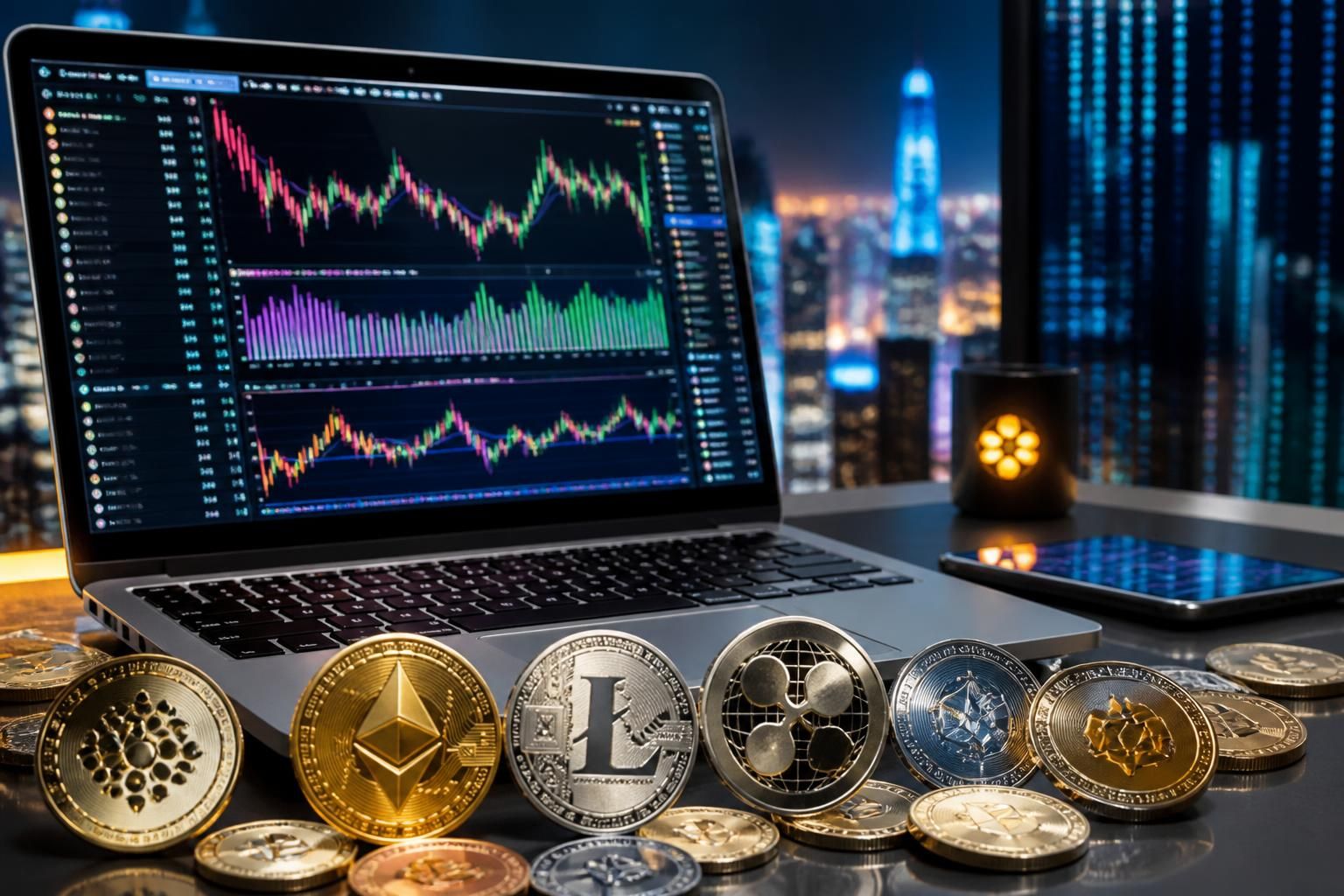
The world of cryptocurrencies has expanded dramatically since Bitcoin first revolutionized digital finance, introducing us to a new era of decentralized money. Today, altcoins—alternative cryptocurrencies beyond Bitcoin—represent nearly half of the crypto market capitalization, offering innovative solutions that reshape how we think about blockchain technology, smart contracts, and decentralized applications. With over 20,000 altcoins available in 2025, understanding these assets is indispensable for anyone aiming to navigate the complex crypto landscape confidently. From Ethereum’s groundbreaking smart contracts to the lightning-fast transaction speeds of Solana, altcoins not only challenge Bitcoin’s dominance but also provide a diverse spectrum of practical uses, investment opportunities, and technological advancements.
Altcoins have emerged to fill gaps left by Bitcoin, addressing issues such as scalability, energy consumption, and application diversity. This guide sheds light on what altcoins are, how they differ from Bitcoin, and introduces key altcoins like Ripple, Litecoin, Cardano, Dogecoin, Polkadot, Stellar, Solana, and Chainlink—each bringing unique value to the ecosystem. Additionally, platforms like Token Metrics equip investors with AI-powered tools to analyze and navigate these alternatives, fostering informed decisions amid an ever-evolving market. For those starting their crypto journey, mastering altcoins opens a gateway not just to potential profits but to active participation in the technological and financial revolution sweeping the globe.
In brief:
- Altcoins encompass all cryptocurrencies beyond Bitcoin, including prominent names like Ethereum, Ripple, and Cardano.
- They often offer faster transactions, smart contract capabilities, and enhanced energy efficiency compared to Bitcoin.
- Types of altcoins include payment-focused coins, smart contract platforms, stablecoins, utility tokens, and community-driven meme coins.
- Investing successfully requires careful research, risk management, and understanding of each altcoin’s technology, team, and market position.
- Advanced research tools like Token Metrics provide AI-driven insights to help investors discern promising altcoins in a crowded market.
Defining Altcoins: What Makes Alternative Cryptocurrencies Unique?
The term altcoin, derived from “alternative” and “coin,” refers to any cryptocurrency other than Bitcoin. Since Bitcoin’s genesis in 2009, altcoins have emerged to challenge its limitations and expand blockchain’s potential far beyond a simple digital currency. Today, there are more than 20,000 altcoins, ranging from established platforms like Ethereum—which pioneered programmable smart contracts—to innovative newcomers exploring decentralized finance, gaming, and beyond.
While Bitcoin laid the foundation, most altcoins differentiate themselves by improving transaction speeds, lowering energy consumption, or enabling new functionalities. For example, Litecoin offers faster payment confirmations, Cardano emphasizes sustainability and formal verification, and Ripple targets cross-border payments with near-instant settlements. Each altcoin plays a distinct role in pushing blockchain technology forward, moving us closer to a decentralized financial future.
How Altcoins Stand Apart from Bitcoin
Altcoins stand out by introducing alternative consensus mechanisms, use cases, and technical architectures. Unlike Bitcoin’s Proof of Work (PoW), many altcoins utilize Proof of Stake (PoS), significantly reducing energy consumption—as exemplified when Ethereum shifted to PoS, cutting its energy use by over 99%. This not only addresses environmental concerns but supports faster, cheaper transactions.
Transaction speed is another crucial differentiator. Bitcoin’s blockchain processes about 7 transactions per second, whereas Solana can handle over 65,000 TPS, making it attractive for applications requiring high throughput. Additionally, smart contract platforms like Ethereum enable decentralized applications, automated financial instruments, and non-fungible tokens, extending blockchain’s reach beyond currency.
Exploring Types of Altcoins: Functions and Use Cases
The altcoin universe is diverse, with each category fulfilling specific roles:
Payment and store-of-value coins like Litecoin and Bitcoin Cash address Bitcoin’s scalability and fee challenges, enabling faster and cheaper transactions. Privacy-focused coins such as Monero seek to protect user anonymity.
Smart contract platforms including Ethereum, Cardano, Polkadot, and Solana facilitate decentralized applications spanning finance, gaming, and identity verification.
Stablecoins like Tether and USD Coin maintain a stable value against fiat currencies, enabling traders to hold positions without exposure to volatility.
Utility and governance tokens power platform-specific services and community decision-making, as seen with tokens like Binance Coin and Chainlink.
Meme coins and community tokens such as Dogecoin often derive their value from social enthusiasm rather than fundamental technology, highlighting both the cultural impact and risk within crypto investing.
Choosing and Managing Altcoin Investments Wisely
Investing in altcoins offers exciting opportunities but demands disciplined research and risk management. Beyond price speculation, successful investing involves evaluating a project’s team, tokenomics, real-world adoption, and competitive positioning within the blockchain ecosystem. Reliable sources like Token Metrics provide AI-powered analytics that assess technology, development activity, market sentiment, and regulatory risks, offering a holistic view needed for sound decisions.
Crypto beginners should also be mindful of common pitfalls as explained in guides on typical beginner mistakes and secure wallet management discussed in how to secure your first crypto wallet. Diversifying investments across altcoin categories can mitigate volatility, while staying up to date with ongoing crypto tips for beginners ensures strategic growth and protection in volatile markets.
Practical Steps to Buy Altcoins and Enter the Market
Getting started with altcoin investing involves a few straightforward steps:
First, explore and identify altcoins that align with your investment goals and risk profile. Research the project’s background thoroughly, including its website, developers, and social presence. Consider wallet compatibility, an essential aspect covered in choosing the right cryptocurrency wallet.
Next, select a reputable exchange such as Binance, Coinbase, or Kraken, which offer access to a wide range of altcoins with user-friendly interfaces and strong security. In some cases, purchasing Bitcoin first and trading it for altcoins may be necessary, depending on exchange offerings and fiat onboarding options.
Once your account is funded, execute your desired purchase and ensure your assets are transferred to a secure wallet off the exchange to maintain control and safety over your investments. These steps reflect core practices in the comprehensive beginner’s cryptocurrency guide, which emphasizes security and informed decision-making throughout your crypto journey.