

After a significant legal setback from the Supreme Court, Donald Trump strikes back by implementing a bold new trade move: a 10% global tariff effective immediately. This pivotal ruling challenged his authority to impose sweeping import taxes, igniting fierce political debate and shaking the US economy. As Trump doubles down on his trade policy stance, the nation’s political landscape is sharply divided, with historic consequences for American consumers and global markets.
In brief:
- The Supreme Court invalidated large parts of Donald Trump’s tariff program, declaring the import taxes illegal due to presidential overreach.
- In response, Trump signed an executive order instituting a universal 10% tariff on imports, effective February 24 for 150 days, including countries with existing trade deals.
- The American Republican party shows signs of division, with some lawmakers wary of the tariffs’ political and economic repercussions.
- The Democrats praise the Supreme Court’s check on executive power, framing the ruling as a win for consumers and a correction of excessive tariffs.
- Economic forecasts warn that potential tariff refunds could cost the US Treasury nearly $120 billion, impacting the nation’s GDP.
How the Supreme Court’s Ruling Shaped the Future of Trump’s Tariffs
On February 20, 2026, the Supreme Court handed down a crucial decision declaring most of President Trump’s tariff actions illegal. The justices ruled that the president had exceeded his authority by unilaterally imposing extensive import taxes. This legal decision marks one of the rare occasions when the Court curbed executive power in economic policy, creating a storm of reactions across Washington.
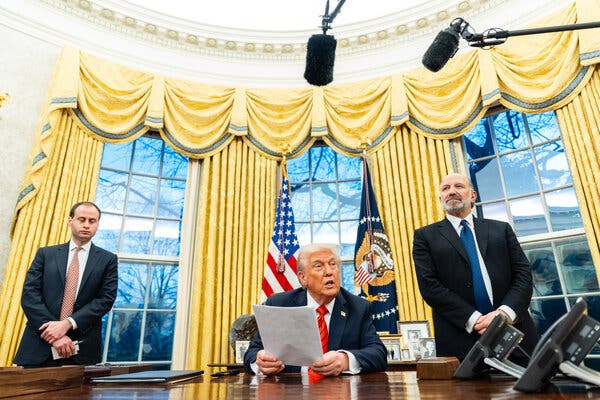
Trump slammed the decision, accusing the judges of being influenced by foreign interests and undermining America’s strength and prosperity. Not one to back down, he swiftly responded by signing a new executive order that slapped a 10% tariff on imports worldwide—inclusive of nations with established agreements like the European Union—demonstrating an unyielding commitment to his trade policy.
Political Divides Over Tariff Strategy
The Republican camp is now fractured. Historically champions of free trade, many conservative lawmakers grow uneasy with the relentless tariff impositions. The measures have forced difficult political decisions, including defending near-tax hikes on American households and businesses.
While the Speaker of the House, Mike Johnson, has praised the effectiveness of tariffs without fully endorsing their reinstatement, some prominent Republicans joined Democrats recently in voting to repeal tariffs on Canada, signaling potential cracks in party unity. Meanwhile, Democratic leaders view the Supreme Court’s ruling as a much-needed check, protecting consumers from unfair taxation.
Economic Ripples from the Tariff Showdown
Since April 2025, the US Treasury collected about $240 billion from tariff revenues. However, the Supreme Court decision threatens these gains, with analysts from Capital Economics estimating that refunds could approach $120 billion—equivalent to about 0.5% of the national GDP. This economic uncertainty weighs heavily on markets and policy makers alike.
Despite these tensions, the stock markets reacted positively immediately following the legal decision. The Dow Jones climbed 0.47%, Nasdaq rose 0.90%, and the S&P 500 also celebrated a 0.69% gain, reflecting a cautiously optimistic outlook from investors.
Such turbulent moments in America’s economic policy echo beyond traditional spheres, impacting investments and offering strategic lessons especially relevant for cryptocurrency enthusiasts. As tariffs influence currency fluctuations, the era demands that every investor stays informed and adaptive—qualities critical to thriving in the modern financial landscape.
To delve deeper into the shifting dynamics of America’s economy under Trump’s policies and how it intersects with global markets, you can explore insights about some of the world’s top financial players and how fluctuations in gold and Bitcoin prices reflect broader economic responses. Additionally, uncover the surprising details from past political maneuvers such as Trump’s Greenland meeting, which reveal strategic layers behind trade and political power plays.