

Discoveries of vast gold deposits in Iran, China, and Saudi Arabia are reshaping the global landscape of natural resources and mining in 2025. These striking finds challenge the traditional view of gold as an exceptionally scarce commodity, offering new perspectives on the precious metal’s availability. Against a backdrop of soaring gold prices and rising demand for stable assets amid economic and geopolitical uncertainties, these countries are positioning gold not only as a key economic asset but also as a strategic weapon in the fluctuating commodity markets. The impact on economic stability, mining industries, and global markets is fundamental, signaling shifts in supply dynamics and prompting renewed interest among investors and governments alike.
Key points at a glance:
- China leads with multiple colossal deposits, including the largest found since 1949, totaling thousands of tonnes of gold ore.
- Iran’s discovery at Shadan mine bolsters economic autonomy as the site conceals enormous amounts of gold-bearing ore, crucial amid sanctions.
- Saudi Arabia diversifies its economy via recently found gold, copper, and zinc deposits in the Arabian Shield region.
- Emerging gold availability contrasts with Bitcoin’s fixed supply, sparking discussions about their respective roles in wealth preservation and investment.
How Massive Gold Deposits in Iran, China, and Saudi Arabia Are Transforming Commodity Markets
In 2025, the mining sector is witnessing unprecedented activity following the unveiling of extensive gold deposits by Iran, China, and Saudi Arabia. China’s discoveries dominate headlines with the Dadonggou deposit in Liaoning province estimated to harbor over 1,400 tonnes of gold ore. Despite low-grade ore concentration, China plans to invest billions to exploit this resource, marking a significant economic impact and reasserting its dominance in natural resource extraction.
Similarly, another striking find in Xinjiang’s tectonically active zone offers a new gold belt exceeding 1,000 tonnes, while Pingjiang in Hunan features a high-grade deep deposit with ore grades reaching 138 g per tonne, underscoring China’s geological advantage.
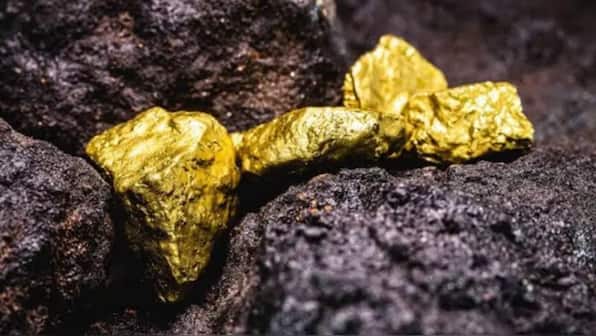
Iran’s Strategic Gold Discoveries: Fortifying Economic Independence Amid Sanctions
Iran’s newly announced Shadan gold deposit is viewed as a strategic asset for economic resilience. The mining site contains an estimated over 61 million tonnes of gold-bearing ore, rich in both oxidized and sulfide forms of gold. This massive reserve is poised to strengthen Iran’s monetary sovereignty by expanding its precious metal reserves, a vital factor as the country grapples with ongoing sanctions that restrict access to international financial systems.
These developments are expected to influence Iran’s national economic policies and potentially affect global mining investment flows.
Saudi Arabia’s Gold and Base Metals Discoveries: A New Chapter in Economic Diversification
South of the existing Mansourah Massarah mine in Saudi Arabia’s Najran region, the Almasane Alkobra Mining Company (AMAK) has uncovered financially viable deposits encompassing gold alongside copper and zinc. Exploration since early 2025 has yielded promising results from more than 27,000 meters of drilling, identifying around 11 million tonnes of mineral resources. With less than 10% of the auro-productive zone explored, Saudi Arabia’s mining sector is on the cusp of significant expansion, supporting the country’s broader ambitions to diversify its economy beyond oil.
The Changing Dynamics of Gold Scarcity and Its Economic Implications
While gold’s price has soared to historic highs exceeding $4,300 per ounce in response to inflationary pressures and geopolitical tensions, the discovery of new deposits is redefining the metal’s scarcity narrative. The rising availability questions gold’s image as a strictly finite commodity and highlights the importance of continuous geological exploration and investment in mining technologies to bring these resources to market.
This evolution impacts commodity markets by potentially diluting the extreme rarity premium traditionally associated with precious metals. Nevertheless, gold continues to captivate investors looking for a stable store of value, especially when paired against volatile fiat currencies and global economic instability.
Gold vs. Bitcoin: Rethinking Precious Metal and Digital Asset Roles
In contrast with gold’s new-found abundance, Bitcoin retains its core appeal with a fixed, limited supply of just 21 million coins. This strict scarcity underpins its growing reputation as “digital gold,” particularly attractive in a digitizing economy. Bitcoin’s immutability, auditability, and ease of transfer present advantages that precious metals have not traditionally offered, stirring lively debates about the future of wealth preservation.
While gold remains a cornerstone in national reserves, Bitcoin’s decentralized nature offers an alternative approach that appeals to a new generation of investors. Understanding how to safely acquire cryptocurrencies and begin investing in crypto is becoming essential knowledge for those exploring diverse asset classes in 2025’s evolving financial landscape.