
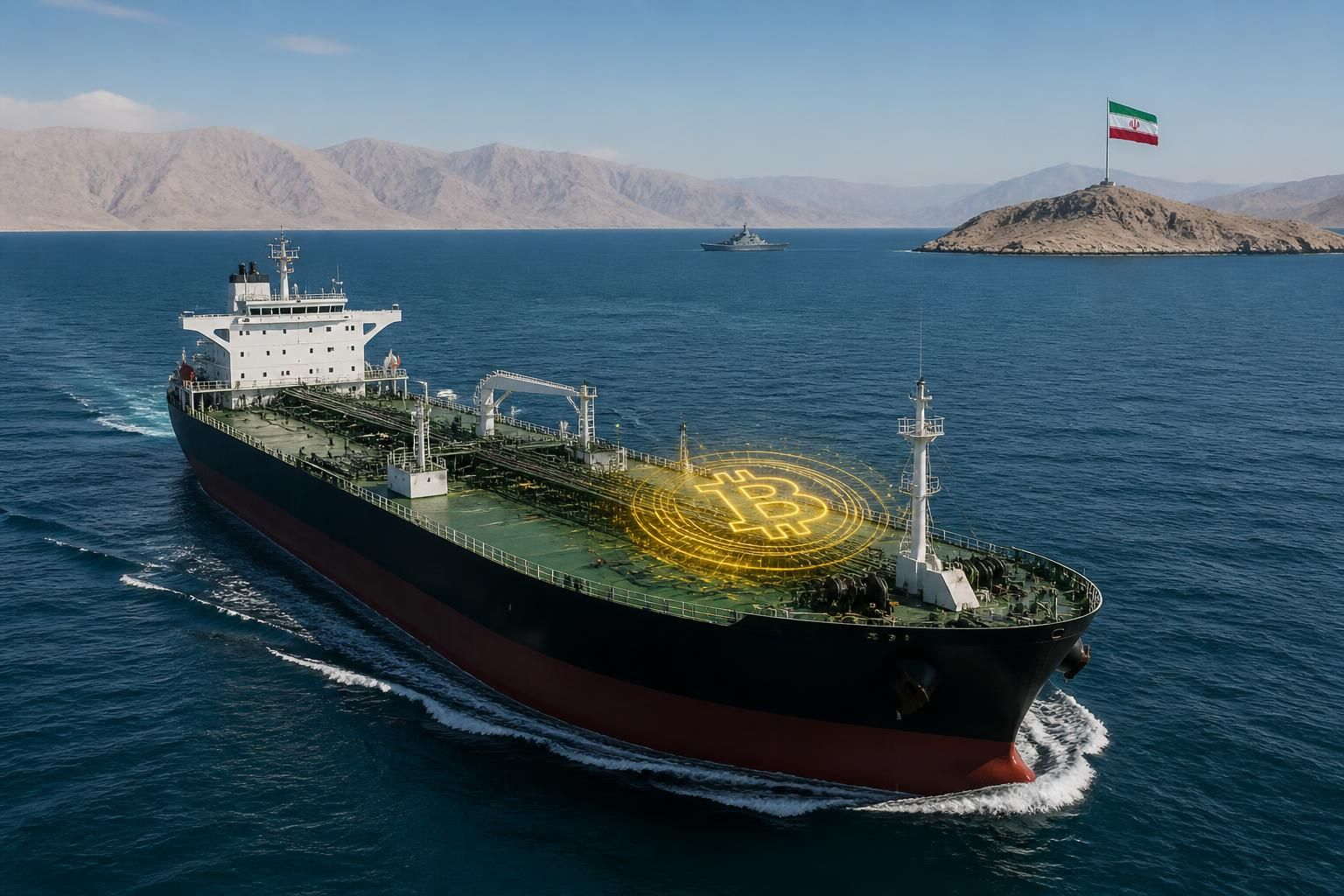
In an unprecedented move that intertwines geopolitics with the evolving world of digital finance, Iran has mandated that all maritime payments for passage through the critical Strait of Hormuz be made using Bitcoin. This decision, arising shortly after a ceasefire agreement with the United States, marks a significant shift in how international trade routes can be influenced by cryptocurrency adoption. With the Strait of Hormuz being a vital maritime passage for global oil shipments, this mandate introduces a bold new layer of economic strategy leveraging blockchain technology to bypass conventional financial restrictions.
Key Points in Brief:
Iran’s new mandate requires all shipping payments through the Strait of Hormuz to be made in Bitcoin, signaling a strategic use of cryptocurrency to maintain control over this essential trade route.
The decree comes amid a fragile ceasefire with the United States, ensuring payment transparency and security through blockchain.
The fee is roughly in the order of 1 USD per barrel of oil, settled in Bitcoin, potentially amounting to between 15 and 30 BTC per supertanker.
This move challenges international sanctions, as Bitcoin transactions are harder to trace and confiscate compared to traditional fiat currencies.
The policy highlights the growing role of cryptocurrencies in geopolitical disputes and global trade, heralding a future where blockchain could underpin key economic infrastructures.
How Iran’s Bitcoin Mandate is Reshaping Payments for the Strait of Hormuz
The Strait of Hormuz has long served as a strategic chokepoint for maritime trade and energy shipments, controlling a large share of global oil traffic. In 2026, following a recent ceasefire with the US, Iran has imposed a mandate requiring all vessels passing through this crucial strait to pay their transit fees in Bitcoin. Unlike the US president’s optimistic declaration of a “complete, immediate, and safe” reopening, Iranian authorities are enforcing strict regulations that ensure Iran retains full oversight of the shipping traffic.
Hamid Hosseini, spokesperson for the Union of Iranian Exporters of Petroleum, Gas and Petrochemicals, revealed that all oil tankers must declare their cargo via email and pay a transit tax of approximately 1 dollar per barrel in Bitcoin or accepted cryptocurrencies including the Chinese yuan. This approach cleverly utilizes cryptocurrency to evade sanctions that limit Iran’s access to global financial networks. Considering typical oil shipments between 1 and 2 million barrels per ship, fees in Bitcoin could reach a staggering 30 BTC per passage.
Why Cryptocurrency Payments Bolster Iran’s Trade Autonomy
Bitcoin’s decentralized nature offers a unique advantage for Iran: it can preserve payment confidentiality while circumventing conventional sanction-related roadblocks. Cryptocurrencies, backed by blockchain technology, provide an unalterable ledger visible globally but resistant to censorship or seizure by international bodies. This makes Bitcoin an attractive currency for Iran’s maritime trade, especially when traditional banking systems are restricted.
This strategy might seem paradoxical considering Iran’s previous internet blackouts—measures that curtailed crypto access domestically. Yet, the embrace of Bitcoin for international payments demonstrates how blockchain is reshaping financial power dynamics across borders.
The Wider Impact on Global Maritime Trade and Cryptocurrency Adoption
With Iran’s mandate in effect, international shipping companies face a pivotal decision: comply with the Bitcoin payment requirement or risk rerouting. Iran’s recent warning about deploying mines in the Strait further complicates navigation and increases pressure to accept these new payment protocols. This could accelerate the adoption of Bitcoin and other cryptocurrencies in the global maritime sector, transforming how trade is conducted beyond traditional currency systems.
Observers see this move as part of a growing trend where cryptocurrencies are more deeply integrated into economic and geopolitical frameworks. With Bitcoin’s increasing resilience and acceptance worldwide, including in contentious regions, it becomes clear that blockchain can empower countries facing financial isolation to sustain vital trade routes.
By mandating Bitcoin payments for maritime passage, Iran not only asserts control over the Strait of Hormuz but also propels the real-world application of blockchain in critical global infrastructure. This development invites us to rethink future trade models, finance autonomy, and how digital currencies can influence international relations in the years ahead.
Discover more insights on the resilience of Bitcoin amidst geopolitical tensions and innovative use cases at crypto-debut.com and explore how cryptocurrency is redefining modern payment systems globally.