
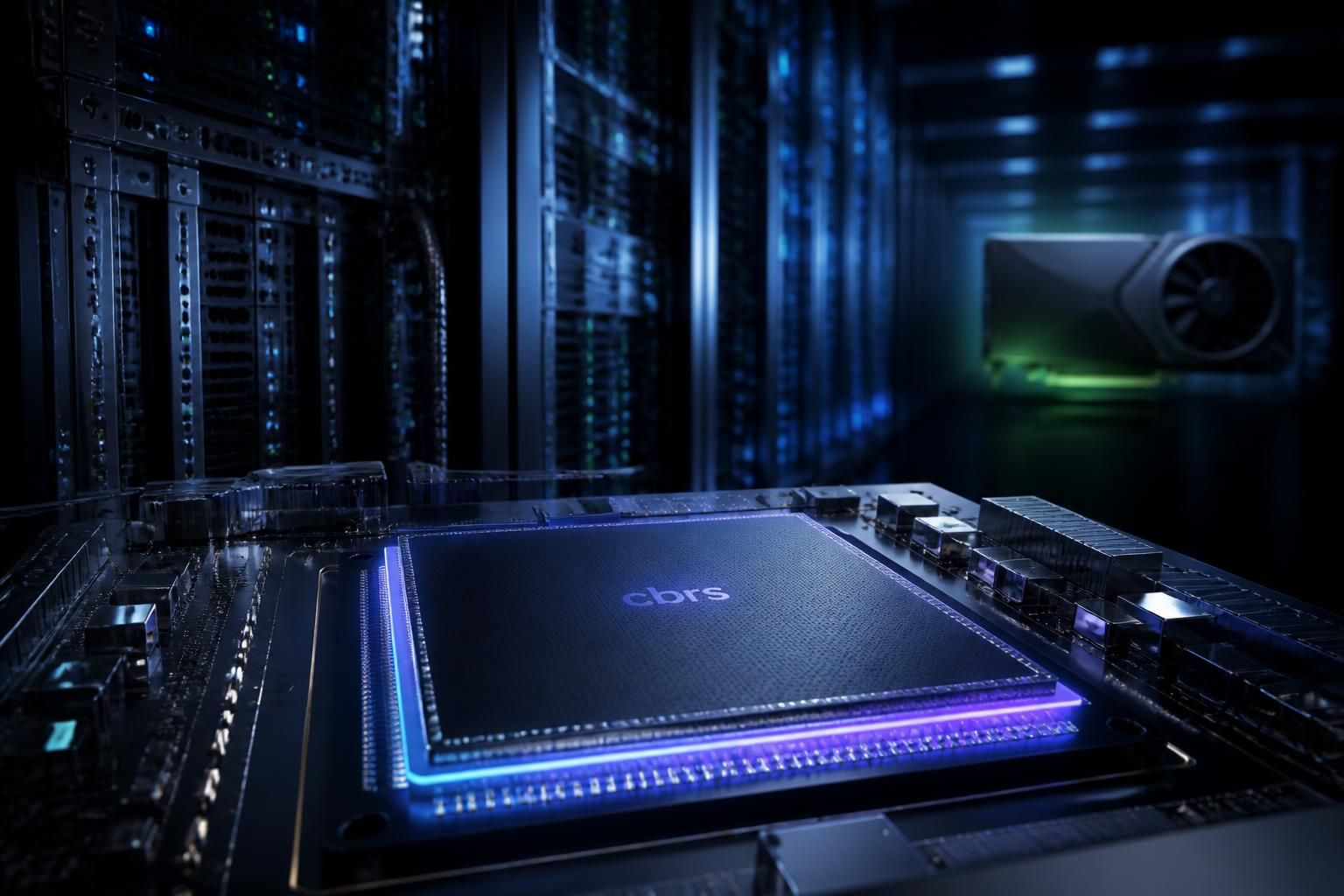
Cerebras Systems has captured the spotlight in 2026 by pulling off the biggest U.S. tech IPO since Uber’s historic 2019 debut. Launching on Nasdaq under the ticker CBRS on May 14, this California-based powerhouse shook the market, surging 68% in its first trading day. As a groundbreaking player in the Artificial Intelligence chip sector, Cerebras positions itself as a bold challenger to Nvidia, boasting the world’s largest AI chip designed to revolutionize how AI inference operates. But beyond the IPO frenzy, one crucial question looms for investors daring to enter this heated battleground of Technology Stocks and Market Competition: Does Cerebras truly merit a spot in your investment portfolio?
Founded in 2016 by a team of semiconductor veterans, Cerebras Systems has taken a radically different path than Nvidia’s classic GPU approach. Instead of clustering small GPUs, Cerebras created the Wafer Scale Engine (WSE-3) — a colossal chip carved from an entire 300mm silicon wafer, pushing boundaries in transistor counts and computational power. This engineering marvel fundamentally changes the game by integrating nearly a million AI cores and memory on-chip, slashing communication latencies that traditionally weigh down GPU clusters.
The stakes are sky-high as Real-world performance benchmarks already reveal that Cerebras’ CS-3 system doubles Nvidia’s flagship DGX B200 when processing massive language models, marking a new era for AI inference workloads. With demand skyrocketing among hyperscalers, particularly cloud giants like Amazon Web Services and AI pioneers such as OpenAI, Cerebras’s positioning taps into one of the fastest-growing segments within the semiconductor industry—inference acceleration.
Yet, as with every exciting rising star, investing in CBRS stock brings formidable risks alongside enticing rewards. The company’s valuation at an eye-watering 127x its 2025 revenue underscores lofty market expectations, leaving little room for mishaps. Manufacturing challenges, concentrated client reliance, and evolving software ecosystems add layers of uncertainty that savvy investors can’t afford to overlook.
For passionate investors eager to understand this riveting challenger to Nvidia and the wider AI chip wars, it’s essential to dissect both Cerebras’ groundbreaking technology and strategic commercial alliances. This exploration reveals whether CBRS is a timely addition for those bullish on artificial intelligence and semiconductor innovation, or an overhyped high-stakes gamble.
In brief:
- Cerebras Systems’ 2026 IPO marked a landmark event in AI chip investing, skyrocketing 68% on debut with a market cap near $65 billion.
- The company’s Wafer Scale Engine-3 boasts 4 trillion transistors and about 900,000 AI cores, dwarfing Nvidia’s B200 GPU.
- Performance benchmarks show Cerebras doubling Nvidia’s token processing speed on large language models, revolutionizing AI inference workloads.
- Key partnerships with OpenAI and AWS have secured a $24.6 billion order backlog, validating Cerebras’s business model.
- Despite remarkable technology, the stock’s valuation and operational risks — like wafer-scale chip manufacturing complexities — warrant a cautious investment approach.
- CBRS represents a rare pure-play opportunity for investors focused solely on AI inference hardware, complementing broader AI and semiconductors investment strategies.
What Makes Cerebras Systems a Disruptive Challenger to Nvidia?
In the intense race within the Artificial Intelligence semiconductor market, Cerebras emerges as the high-impact challenger to the reigning champion, Nvidia. While Nvidia has long leveraged its GPU-centric ecosystem, built over decades with its CUDA software stack, Cerebras bet on one audacious innovation: a wafer-scale chip that integrates the entire silicon wafer as a single processor. This disrupts the conventional architecture where clusters of multiple chips communicate via slow interconnects, causing latency and power efficiency hurdles.
The WSE-3 delivers staggering hardware specs — approximately 4,000 billion transistors, nearly 900,000 AI cores, and a breathtaking 21 petabytes per second memory bandwidth. Compared to Nvidia’s B200 GPU, which has about 208 billion transistors and 17,000 CUDA cores, Cerebras’s solution revolutionizes throughput and latency, unlocking new possibilities for running enormous AI models efficiently.
This leap in Technology Stocks is more than just numbers—it translates to real-world gains. For instance, the CS-3 system handles around 2,500 tokens per second on Llama 4 Maverick (a model with 400 billion parameters), outperforming Nvidia’s top GPUs by more than double on such lucrative inference tasks. This performance edge is critical, as the AI industry increasingly shifts budgets from training to inference, the operational phase where AI services are actually deployed and monetized.
Strategic Partnerships Cement Cerebras’ Market Position
The pace and scale of adopting Cerebras’s technology depend heavily on two pivotal partnerships signed early in 2026. First, OpenAI’s $20 billion-plus contract for inference capacity confirms Cerebras as a major player in powering next-gen AI applications. OpenAI’s dissatisfaction with Nvidia’s GPU performance in inference made Cerebras a preferred collaborator, illustrating the chip’s potency to speak loudly in the AI arms race.
Second, Amazon Web Services’ endorsement through integrating Cerebras systems within their data centers further extends Cerebras’s reach, tapping millions of enterprise customers globally. AWS’s complementary approach, coupling Cerebras’s inference-specialized chips with their proprietary Trainium chips aimed at training, broadens customer options and solidifies Cerebras’s foothold in an expanding cloud market.
Should You Consider Buying CBRS Stock Now?
For investors intrigued by the AI semiconductor sector’s dynamism, CBRS stock represents an unprecedented pure-play opportunity focused entirely on AI inference. Its exciting technology, impressive backlog, and strategic client validation build a compelling story. However, you should weigh this against the extraordinary valuation multiples that imply perfection in execution and market dominance.
Risks include heavy reliance on a few key customers, particularly OpenAI, manufacturing challenges due to the unique wafer-scale format, and slower software adoption compared to Nvidia’s entrenched CUDA ecosystem. Additionally, CBRS shares have shown sharp volatility after IPO, reflecting market uncertainty around the company’s growth trajectory.
For cautious investors, waiting to review verified earnings over the next few quarters could provide valuable insight into Cerebras’s performance and contract execution capabilities. Meanwhile, adventurous investors with a strong appetite for high-risk, high-reward technology stocks may find CBRS a thrilling addition to diversify their AI-focused portfolio.
Balancing excitement with prudence, Cerebras exemplifies the transformative potential and volatile nature of investing in cutting-edge semiconductors powering the AI revolution. For those keen on expanding their exposure beyond traditional big players, CBRS could be the gateway to a new frontier in investing.
Don’t forget to explore complementary avenues if you’re looking to diversify your tech holdings — the growing trends in AI materials stocks and ETFs and other semiconductor investments continue to reshape portfolios globally.