
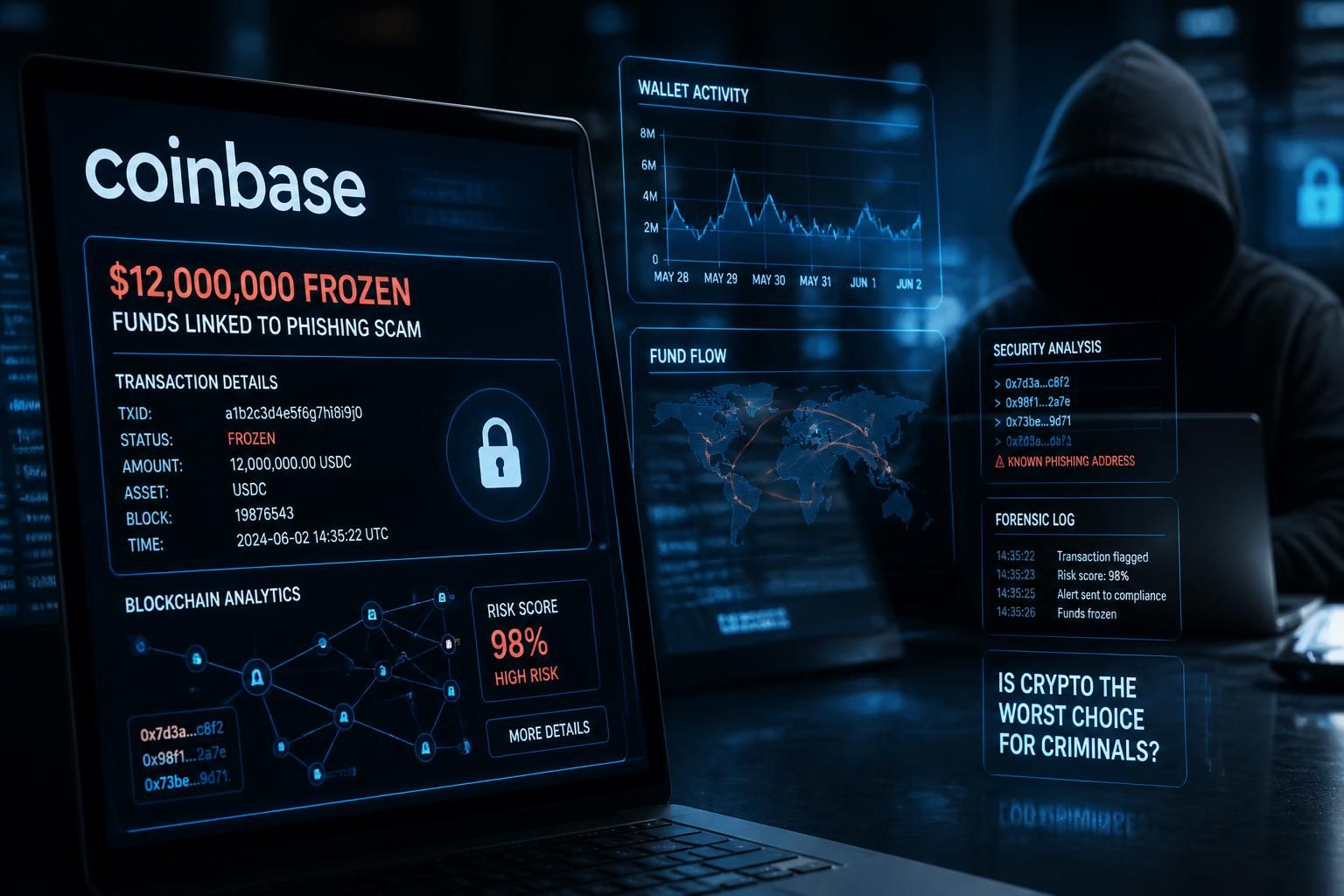
In a significant move highlighting the evolving landscape of cryptocurrency security, Coinbase has recently frozen over $12 million linked to a sophisticated phishing scam that targeted more than 20,000 victims. This action is part of a concerted effort involving the US Secret Service and global law enforcement agencies to curb fraud and criminal misuse of digital assets. Far from being the utopia of anonymity for criminals as often portrayed, the transparency of blockchain and the cooperation between authorities and crypto platforms demonstrate the growing effectiveness of security and regulation in this space.
Brief:
– Coinbase collaborates with US Secret Service and UK National Crime Agency to freeze $12 million stolen via phishing.
– Over 20,000 victims identified in a phishing approval scam affecting cryptocurrency wallets.
– Blockchain transparency accelerates investigations, breaking traditional finance timeframes.
– Controversy around stablecoin fund freezing capabilities sparked by recent Circle USDC actions.
– Cryptocurrency misuse still reported but ongoing crackdown highlights improved fraud deterrence.
The Role of Coinbase in Freezing $12 Million Amid a High-Profile Phishing Scam
Cryptocurrency often faces criticism as a tool abused by criminals, yet recent developments underscore a more complex reality. Coinbase’s recent announcement that it has assisted in freezing $12 million connected to a phishing scam reveals not only the vulnerabilities but also the growing power of crypto security. Through innovative blockchain tracking and collaboration with the US Secret Service and UK’s National Crime Agency, Coinbase played a pivotal role in dismantling a phishing approval scam — a technique tricking users into authorizing fraudulent transactions via fake app requests.
This incident involved more than 20,000 victims whose wallets were compromised due to malicious approval commands. The swift freezing and tracing of stolen funds show that cryptocurrency transactions, recorded transparently on-chain, allow authorities to backtrack down criminal networks rapidly, contrasting sharply with delays commonly experienced in traditional finance systems.
How Blockchain Transparency Empowers Security Efforts Against Phishing Scams
Despite suspicions that crypto could shield criminals, the immutable ledger of the blockchain turns these assumptions on their head. Every transaction, wallet interaction, and approval is permanently visible, enabling teams like Coinbase’s global intelligence unit to follow the money flow decades quicker than conventional methods. Paul Grewal, Coinbase’s chief legal officer, noted this operation, which traditionally might have taken months, was resolved in just a week thanks to blockchain’s traceability.
This technology’s transparency not only aids in freezing illicit funds but also supports victim identification and recovery strategies. For newcomers seeking to understand how to protect themselves, these recent events underscore the importance of educating oneself on crypto wallet security and recognizing phishing techniques, which remain the most common entry points for fraud.
Stablecoins and the Controversy of Fund Freezing: A Double-Edged Sword in Crypto Security
The capacity of stablecoin issuers, such as Tether’s USDT and Circle’s USDC, to freeze assets on demand has become a controversial topic. While offering an anchor of regulation and a tool for law enforcement, critics argue these controls conflict with the decentralized ethos many associate with cryptocurrencies.
Earlier this year, Circle notably froze USDC funds during an investigation by the US Secret Service, an act simultaneously praised for security intervention and criticized for apparently undermining user autonomy. The process of forcibly immobilizing funds “is not an arbitrary decision but one mandated by law,” highlighted in Circle’s public explanations on social media.
Nonetheless, even with freezing powers in place, certain stablecoins continue to be exploited by criminals, particularly in less regulated regions or on obscure networks like Tron (TRX), often coupled with encrypted messaging platforms such as Telegram. However, the possibility of asset freezing remains a deterrent, contributing to higher security standards across the ecosystem.
Protecting Your Crypto Assets: Practical Steps Against Phishing and Fraud
With phishing scams evolving in creativity, users should become vigilant and informed. Key precautions include verifying transaction requests, using hardware wallets, and employing multi-factor authentication. Education on the basics of cryptocurrency security, accessible through guides like the beginner cryptocurrency guide, can dramatically reduce risks.
Moreover, understanding the mechanics of fund freezing and the legal frameworks surrounding stablecoins adds a layer of assurance for crypto investors. In the dynamic world of digital currencies, keeping abreast of evolving regulation and security practices is your strongest defense against fraud and criminal threats.