
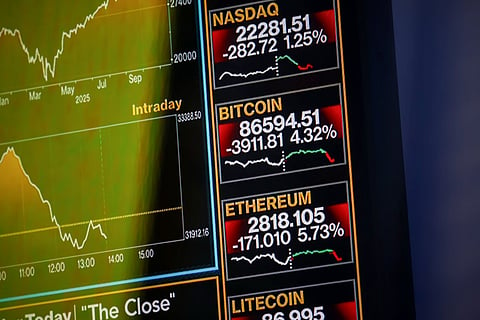
Bitcoin’s performance amid geopolitical tensions signals a shifting landscape in digital currency markets. As the Middle East conflict escalates, Bitcoin surged past key resistance levels, reflecting its emerging role as a resilient asset in uncertain times. March 2026 marks a pivotal moment where cryptocurrency markets added significant capital, fuelled by institutional interest and evolving regulatory frameworks. Investors witnessed Bitcoin crossing above $74,000, defying skeptics who labeled such rallies as false signals. This momentum came alongside the addition of roughly $140 billion to the overall crypto market capitalization in just 24 hours, underscoring a robust appetite for digital assets despite global unrest.
Meanwhile, regulatory clarity is intensifying in the United States. The SEC’s recent moves toward stricter oversight, including tighter rules for stablecoins and upcoming votes on how securities laws apply to crypto assets, illustrate a maturing market environment. This regulatory evolution aims to provide a safer space for investors and legitimize the market further. On the corporate side, innovative milestones like Zerohash’s application for a national trust bank license are setting new precedents, enabling crypto firms to expand their services within traditional financial frameworks.
Political voices also shape the crypto narrative: Donald Trump’s advocacy for accelerated legislation to secure America’s leadership in cryptocurrency signals heightened governmental attention. Industry leaders, like Coinbase CEO Brian Armstrong, emphasize the strength of blockchain foundations as safeguards against economic instability, further embedding digital currencies in mainstream discourse. The rise of Bitcoin ETFs outpacing traditional gold-backed ETFs presents a clear institutional shift, reinforcing Bitcoin’s growing acceptance as a key component of diversified investment strategies.
Understanding these dynamics allows new cryptocurrency enthusiasts to recognize how markets respond to geopolitical impacts and regulatory developments. This Crypto Recap highlights the resilience and innovation that continue to define Bitcoin’s advancing trajectory in 2026.
Brief in English:
- Bitcoin surged past $72,000 to $74,000 amid Middle East conflict tensions.
- The total crypto market capitalization grew by approximately $140 billion within 24 hours.
- U.S. SEC advances regulatory clarity for cryptocurrencies, targeting stablecoins and asset classifications.
- Zerohash seeks national trust bank status, marking a significant step toward mainstream banking integration.
- Political figures and industry leaders champion crypto’s role as a financial safeguard and growth opportunity.
- Bitcoin spot ETFs have surpassed gold ETFs in cumulative net inflows over a remarkably short period.
Bitcoin Market Advances Amid Middle East Conflict Highlight Crypto Resilience
The continued volatility in the Middle East has a distinct impact on global financial systems, especially on the cryptocurrency market. Bitcoin, often viewed as the “digital gold” of the blockchain space, demonstrated its resilience by climbing above $74,000 during March 2026, despite persistent geopolitical uncertainties.
This advancement can be attributed to increasing demand for alternative assets as traditional markets waver. Bitcoin’s ability to recover and advance, even when regions of geopolitical tension stir global anxiety, points to its growing acceptance as a hedge in diversified portfolios. This was especially evident as the overall crypto market added over $140 billion in capitalization in just one day.
Notably, spot Bitcoin ETFs attracted massive inflows totaling over $500 million, underscoring institutional confidence in digital currency as a legitimate investment avenue. This level of institutional engagement propels Bitcoin beyond mere speculation, reinforcing its structural role across financial ecosystems.
U.S. SEC’s Regulatory Approach Enhances Market Stability
In March 2026, the U.S. Securities and Exchange Commission (SEC) moved decisively towards clarifying how securities laws apply to cryptocurrency assets. Their focus on stablecoin regulation, treating them akin to money-market funds, reflects an ongoing effort to safeguard investors while fostering innovation.
Three commissioners are set to vote after comprehensive inter-agency reviews, signaling a more defined regulatory environment for cryptocurrencies. This initiative provides crucial guidance to market participants and supports sustainable growth by mitigating risks associated with vague legal interpretations.
The SEC’s sharpened stance also introduces higher compliance standards, which, although challenging, pave the way for broader institutional adoption. These developments set a foundation for industry players like Zerohash, which recently applied for a federal trust bank license to offer fiduciary services under regulated supervision.
Political and Corporate Voices Fuel Cryptocurrency Adoption
Political advocacy amplifies cryptocurrency’s potential, with figures like Donald Trump pushing for the swift enactment of the Clarity Act to reinforce the United States’ dominance in blockchain technology. His warnings about the industry moving offshore toward regions such as China highlight concerns over competitive geopolitical influence in digital assets.
In the corporate sphere, Coinbase’s Brian Armstrong reinforces this narrative by praising the robust foundations of cryptocurrencies. Armstrong underscores Bitcoin’s capacity to empower individuals by providing direct control over their finances—mitigating risks associated with currency devaluation or asset seizure.
The combination of political momentum and industry leadership accelerates crypto’s integration within both public policies and traditional finance. This synergy catalyzes innovation and accessibility, inviting more participants into the crypto ecosystem.
Institutional Shift Evident as Bitcoin ETFs Outpace Gold
The institutional appetite for Bitcoin is unmistakable, as spot Bitcoin ETFs have now eclipsed their gold ETF counterparts in net inflows over under two years—a feat that took the gold ETFs more than 15 years to achieve.
This rapid acceleration reflects changing perceptions where digital currency emerges as a mainstream asset. Investors seek the portfolio diversification and liquidity Bitcoin provides, supported by regulatory clarity and market maturity.
Such institutional embrace not only fuels market advances but also cements Bitcoin’s position in global financial markets, exemplifying its transformation from a niche digital currency into a foundational investment vehicle for 2026.