
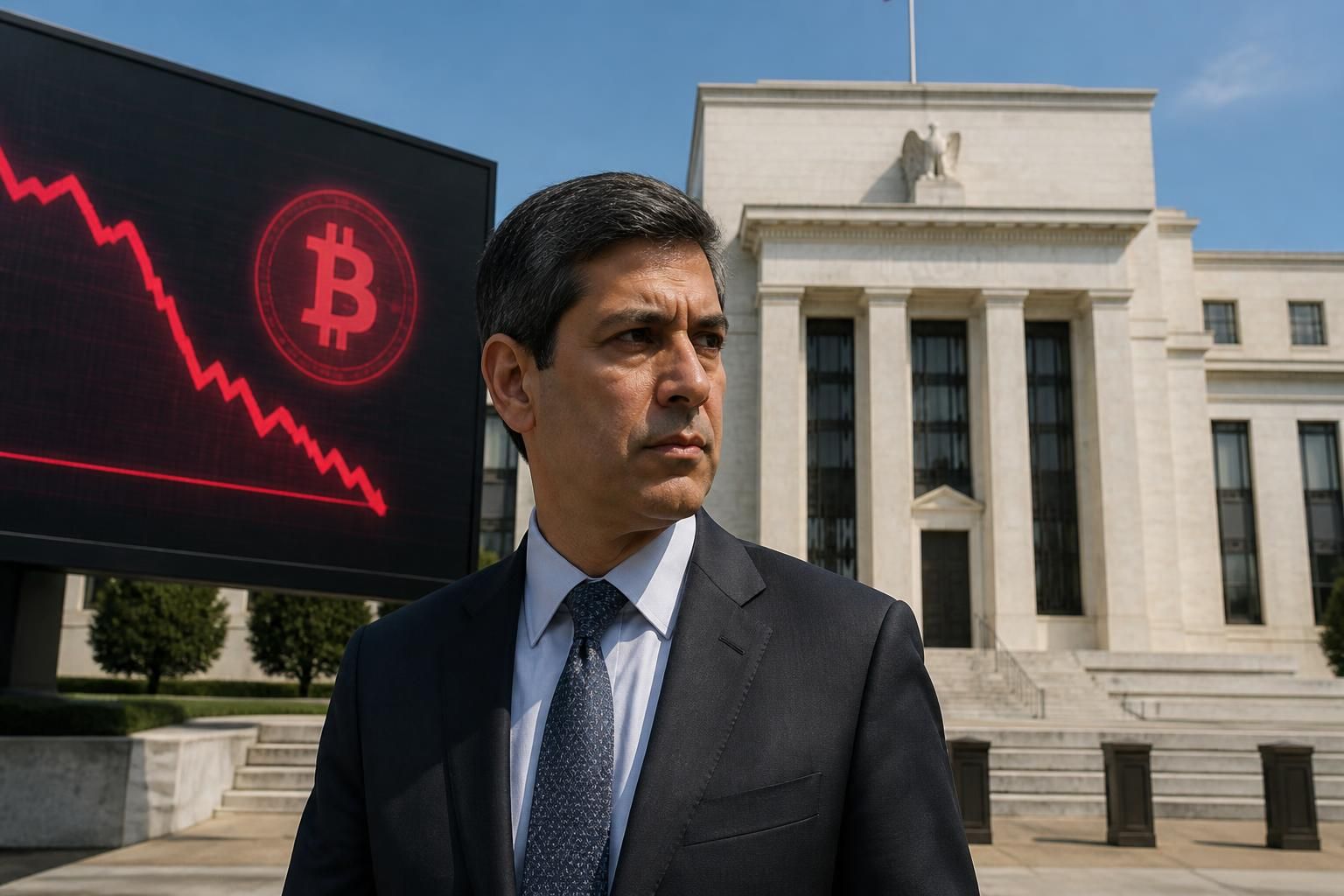
Bitcoin experiences a significant price drop as Kevin Warsh takes command of the Federal Reserve, shaking investor confidence amid complex economic and geopolitical challenges. Despite Warsh’s reputation as a pro-crypto figure, Bitcoin (BTC) fell below $75,000 shortly after his inauguration, confronting fresh volatility and market uncertainty in mid-2026. This decline reflects a mix of mounting inflation pressures, geopolitical tensions, and stalled regulatory progress, leaving many wondering about the future trajectory of the cryptocurrency.
Key Highlights in Brief:
- Kevin Warsh becomes the 17th chair of the Federal Reserve, signaling potential reforms but inheriting a challenging economic environment.
- Bitcoin’s price drops rapidly below $74,500, marking a sharp loss amid geopolitical strains like the ongoing U.S.-Iran conflict.
- Inflation sustains at multi-year highs, combined with mortgage rates near their highest levels since 2025, contributing to decreased consumer confidence.
- Tokenized asset regulation faces delays, as the SEC postpones frameworks critical to market expansion, dampening investor enthusiasm.
- Traditional stock markets reach record levels, yet cryptocurrency markets diverge, reflecting unique vulnerabilities and opportunities.
Kevin Warsh’s Federal Reserve Leadership and Its Immediate Market Impact
Kevin Warsh, appointed by President Donald Trump, officially assumed leadership of the Federal Reserve amid soaring inflation and complex geopolitical challenges, notably the ongoing conflict with Iran. Warsh promised a focus on reform and learning from prior economic lessons, earning cautious optimism from policymakers and market observers. Yet, the cryptocurrency ecosystem, and particularly Bitcoin (BTC), did not share this enthusiasm. Instead, BTC plunged below the critical $75,000 mark within hours of Warsh’s swearing-in — a stark reminder that positive leadership signals alone do not guarantee market rallies.
BTC’s plunge occurred against the backdrop of surging inflation rates, unsettling mortgage costs, and general economic unease, pointing to a landscape where short-term macroeconomic headwinds overshadow promising regulatory shifts. For beginners trying to navigate this volatility, it’s key to understand that these drops reveal inherent market reactivity and the flow of global economic pressures. Investing wisely means embracing this volatility, buying strategically while being mindful of broader economic indicators.
Inflationary Pressures, Consumer Sentiment, and Crypto Market Volatility
The moment Warsh took office, inflation was at a three-year peak, exacerbating uncertainty for consumers and investors alike. Mortgages hovered near their highest rates since August 2025, while oil prices remained stubbornly above $100 per barrel — factors that combine to strain spending and investment appetite across the U.S. economy. Notably, American consumer sentiment reached historic lows, with fears and doubts surpassing those from prior crises like 9/11 or the Great Recession. This economic stress translated directly into the cryptocurrency market’s struggle to find firm support.
A telling indicator of crypto market health, the Coinbase Premium Index, has been negative for several days, signaling weaker buying activity from U.S.-based investors relative to international participants. This disparity highlights how global players sustain Bitcoin prices even when domestic confidence falters. Meanwhile, traditional markets like the Dow Jones, S&P 500, and Nasdaq reached new all-time highs, illustrating crypto’s uncoupling from conventional financial instruments. This divergence underlines Bitcoin’s unique volatility and its sensitivity to different factors, including institutional sentiment and regulatory developments.
Regulatory Setbacks and Their Ripple Effect on the Crypto Space
Adding friction to the market’s fragile optimism, the Securities and Exchange Commission (SEC) delayed its much-anticipated regulatory plan regarding tokenized assets. This plan, designed to provide legal clarity to blockchain-based representations of U.S. stocks, was expected to catalyze investor confidence and expand tokenization adoption. However, concerns from former regulators and stock market officials about “third-party tokens”—those issued without company consent—have slowed progress. Questions about equal rights for token holders, such as dividend eligibility and voting power, remain unresolved.
This postponement casts a shadow over emerging projects and platforms counting on regulatory certainty. Companies like Securitize and Ondo, which had significant ambitions in token-related securities, now face renewed uncertainty. For cryptocurrency enthusiasts and investors, including beginners, staying informed on how regulatory decisions unfold is crucial. These frameworks will ultimately influence Bitcoin’s institutional demand and market direction in the coming months, especially as investors look to spot signals from Fed Chair Warsh’s early comments on interest rates.
As of now, Bitcoin’s trading price remains around $74,679, reflecting a 1.11% decline in the past 24 hours. While short-term market pressures are evident, understanding the broader context of geopolitical turbulence, inflation trends, and regulation highlights crypto’s resilience and potential for eventual recovery.
For those eager to dive deeper, exploring how Bitcoin weathers ongoing tensions like the geopolitical strains impacting its price offers critical insight. Moreover, tracking investment shifts amid recent Bitcoin price drops helps reveal opportunities hidden within periods of crypto volatility.