
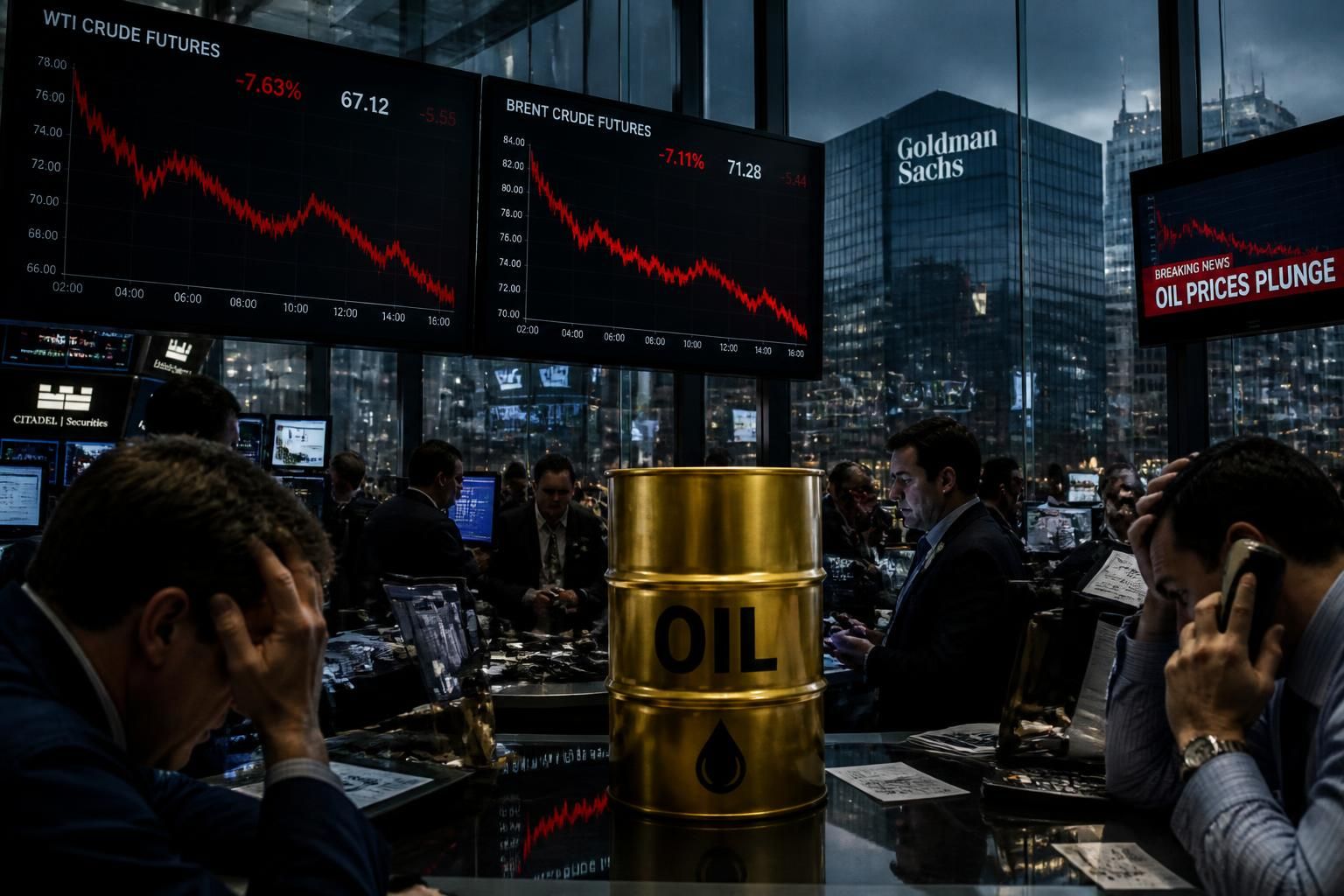
The global economy is currently facing an unprecedented energy crisis as Goldman Sachs issues a stark warning about the largest oil shock in recorded history. Following the near-total closure of the Strait of Hormuz after coordinated American and Israeli strikes in late February 2026, the world’s commodity markets are grappling with a supply crunch of historic proportions. This chokepoint, responsible for nearly 20% of global oil shipments and up to 30% of liquefied natural gas exports, has seen traffic plummet by over 95%, triggering a severe ripple effect on energy prices and market volatility worldwide.
In brief:
- Goldman Sachs identifies an unprecedented disruption in oil supply due to the effective closure of the Strait of Hormuz.
- Oil prices are driven higher amid tight market conditions, with forecasts suggesting Brent crude may surge above $100 per barrel if the conflict extends past spring.
- The global economy faces heightened inflationary pressures as energy prices spike, impacting fuel supplies, especially jet fuel and diesel.
- Asian markets, particularly Japan, South Korea, and China, endure the harshest impacts due to their heavy reliance on Middle Eastern imports.
- Alternative shipping routes like Saudi Arabia’s East-West pipeline operate at maximum capacity but only partially offset the supply gap.
Goldman Sachs Highlights the Severity of the Current Oil Supply Shock
The recent geopolitical conflict has paralyzed one of the world’s most critical energy corridors. Goldman Sachs describes the situation as the largest supply shock ever experienced in global crude markets. The sudden disruption through the Strait of Hormuz, a vital artery for energy ship traffic, has led to a dramatic 61% drop in Middle Eastern oil exports by March 2026. Such a severe interruption dwarfs previous challenges faced in the last fifty years and signals prolonged difficulties for commodity markets worldwide.
Economic Impact on Energy Prices and Inflation
Energy prices are under immense strain, and the shockwaves extend far beyond raw crude oil. Products refined from crude—like jet fuel, diesel, and liquefied petroleum gas—are experiencing heightened shortages. Goldman Sachs forecasts not only an inflationary surge fueled by rising oil prices but also warns of broader economic consequences. The tightening energy supply threatens to stall economic growth globally, especially in markets already feeling the strain of recent volatility.
Market Volatility and Long-Term Risks for the Global Economy
The closure of Hormuz has sent shockwaves through the global commodity and financial markets. Investors are facing increased market volatility as supply constraints persist. Goldman Sachs and other financial firms note that unless alternative routes or diplomatic solutions emerge swiftly, the economic fallout could be severe. Stocks linked to energy companies face downward pressure, while inflation concerns intensify central banks’ dilemmas. This environment creates a compelling case for diversified investment strategies, including exposure to digital assets that have shown resilience under geopolitical stress.
Asia’s Heightened Vulnerability to Energy Supply Disruptions
Asia is especially exposed due to its heavy dependence on Middle Eastern oil. Japan relies on these imports for over 90% of its crude oil needs, South Korea more than 70%, and China about 57%. With limited reserves—India and Thailand hold less than three weeks’ supply of refined products, while Japan remains an outlier with just over three months’ reserve—the region could face prolonged hardship. Rising energy prices will likely increase operational costs, pressuring economies that are crucial engines of global growth.
For those eager to navigate this complex landscape, understanding the evolving risks around oil supply and energy prices is essential. Investors can explore complementary crypto investments as part of a diversified portfolio strategy to balance exposure amid ongoing market volatility. Moreover, lessons from past geopolitical shocks illustrate how resilience in sectors like digital currency may offer unexpected stability during turbulent times, as highlighted in discussions around the geopolitical resilience of Bitcoin.