
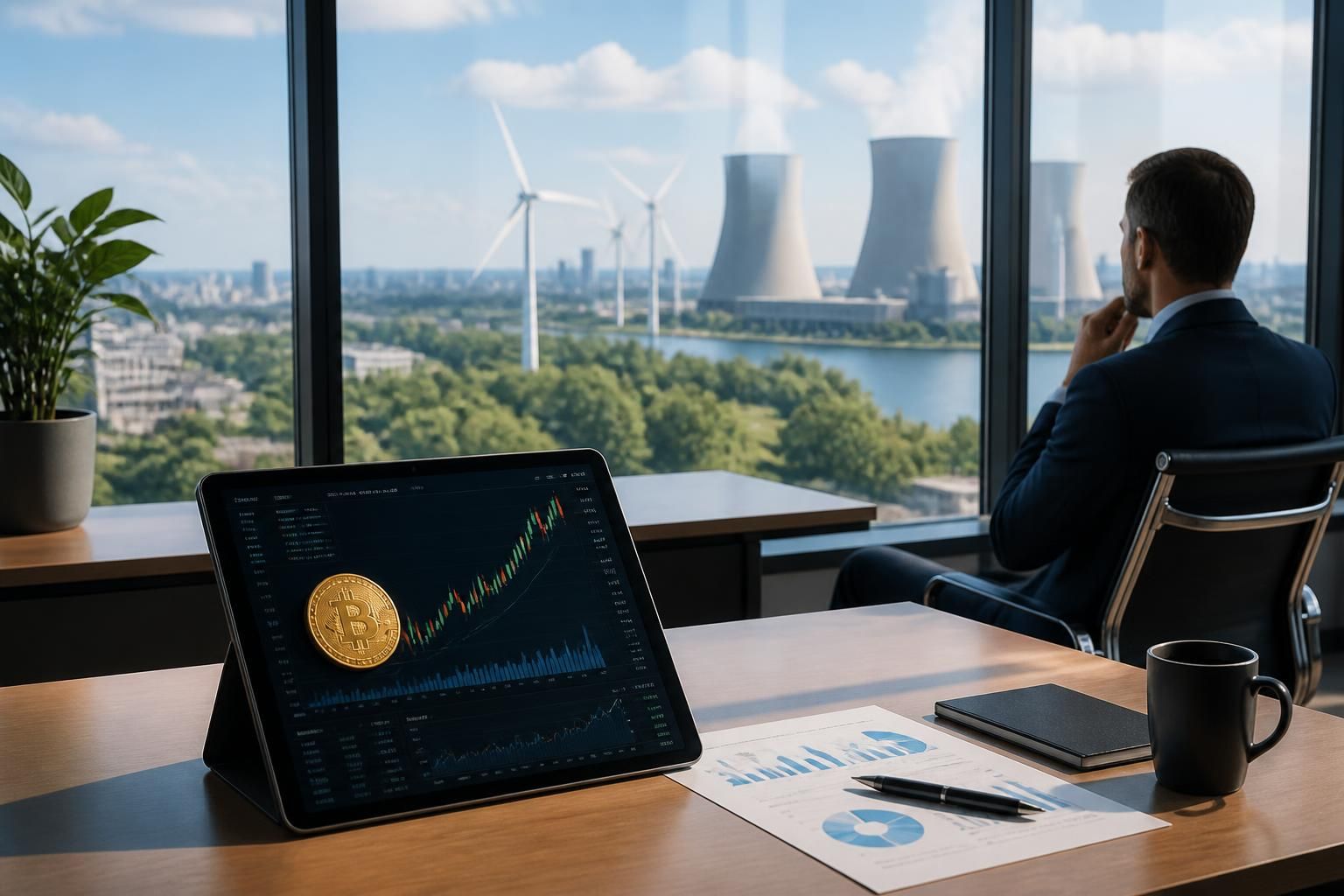
In a world rapidly embracing cryptocurrency and the transformative potential of blockchain, the story of EDF’s missed opportunity to capitalize on Bitcoin mining resonates as a powerful lesson. With its massive infrastructure predominantly powered by nuclear energy, France’s energy giant, EDF, found itself producing more electricity than its demand. Yet, in 2017, a proposal to harness this surplus electricity for Bitcoin mining — a chance to generate an estimated 5 billion euros in profit — was declined. Fast forward to 2026, and that opportunity is being seized not by EDF, but by a major American Bitcoin mining company, showcasing how strategic investment in digital assets can unlock new realms of financial growth.
The dynamics at play illustrate the intersection of energy resources, innovative cryptocurrency applications, and the evolving financial landscape. Despite EDF’s daunting 51 billion euros debt, Bitcoin mining presented a pathway to monetizing excess power without significant additional costs. The reluctance stemmed from ideological barriers rather than technical ones, contrasting sharply with the decisive steps taken by private actors and foreign investors who now reap the benefits.
For enthusiasts and beginners in the crypto realm, this narrative underscores the immense potential of digital currencies—not just as financial instruments but as catalytic tools for optimizing existing industrial capacities. The tale invites us to rethink how established industries might embrace blockchain-driven innovation to fuel both economic and ecological sustainability.
EDF’s Surplus Electricity: A Hidden Goldmine for Bitcoin Mining Profits
France’s energy grid, heavily reliant on nuclear power, structurally produces more electricity than the country consumes. In 2025 alone, EDF faced approximately 8 TWh of surplus electricity that often goes unused despite France’s role as a net electricity exporter. This surplus represents a significant untapped digital asset opportunity, perfectly aligned with the energy-intensive process of Bitcoin mining.
Back in 2017, Sébastien Gouspillou, a French Bitcoin miner and co-founder of BigBlock DC Bitcoin, proposed an elegant solution: install Bitcoin mining containers near EDF’s nuclear plants to absorb this excess power. This idea was technically feasible, required no additional infrastructure expenses, and did not face regulatory hurdles. Yet, EDF declined the opportunity, allowing a potential income stream estimated at 5 billion euros to slip away.
The hesitation wasn’t due to technical limitations but rather a prevailing skepticism about Bitcoin’s environmental and monetary value. Olivier Deneux, then innovation director at EDF US Innovation Lab, initially suggested exploring “something more beneficial to the climate,” demonstrating a preference for traditional views on sustainability over embracing cryptocurrency’s disruptive potential. Although later acknowledging Bitcoin mining’s possible environmental benefits, EDF never moved forward with the plan.
From Ideological Blocks to Economic Consequences: What EDF Missed
EDF’s reluctance stemmed primarily from an ideological resistance against the emerging cryptocurrency paradigm. This missed opportunity highlights how entrenched perspectives can prevent legacy companies from leveraging blockchain innovation for tangible profit. Instead, in 2026, EDF sold a 64% stake in its Exaion subsidiary to the American Bitcoin mining giant MARA, effectively transferring the opportunity and its benefits to foreign hands.
This decision not only reflects a loss in financial growth for EDF and France but also signals a shift where private and international players dominate the digital asset mining landscape within France’s borders. The situation serves as a cautionary tale about the cost of ignoring novel uses of existing resources.
Individual Innovation: Mining Bitcoin at Home to Transform Energy Use
While EDF hesitated, innovators and private individuals embraced the challenge, turning to accessible solutions that combine heating and Bitcoin mining. The Ofen 2 heater, developed by Austrian startup 21energy, exemplifies this approach by converting electricity into both heat and Bitcoin simultaneously. Operating at 40 TH/s with a maximum power draw of 1,000 watts, this device allows users to recover approximately 30% of their electricity bill in Bitcoin.
This technology embodies the essence of digital asset investment on a domestic scale, offering a practical introduction to mining without large-scale infrastructure. It also mirrors what EDF could have realized on an industrial level years earlier, embodying a shift toward multifunctional, efficient use of energy.
Empowering Beginners: How This Reflects the Future of Cryptocurrency Involvement
The story of EDF’s missed investment is profoundly instructive for anyone interested in the cryptocurrency world. It illustrates that the power to partake in the digital asset revolution increasingly lies in innovative approaches—whether through large institutional moves or individual initiatives. Digital currencies like Bitcoin, intertwined with existing energy frameworks, represent more than speculative financial instruments; they’re catalysts for redefining energy utilization and generating sustainable profit.
As we advance, grasping these connections between energy, blockchain technology, and investment will be crucial to unlocking future opportunities. Professionals and beginners alike must recognize that crypto mining is not a mere niche but a dynamic sector influencing global financial growth and the evolution of energy policy.