
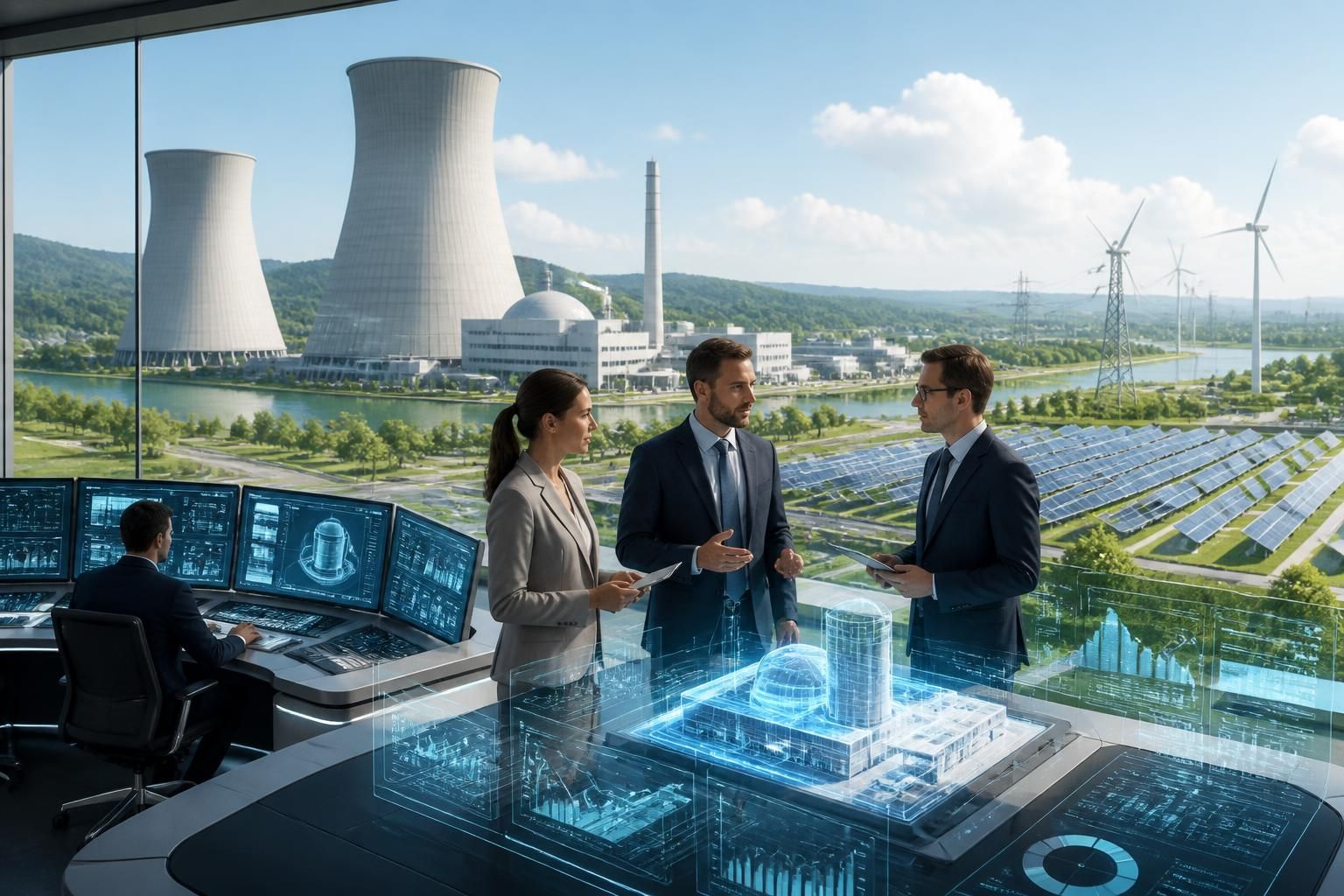
The landscape of nuclear energy investing in 2026 is rapidly evolving, driven by soaring energy demands, especially from booming AI data centers, pressing global decarbonization goals, and the pursuit of energy independence. After a decade of hesitation post-Fukushima, nuclear power is making a dynamic comeback, emerging as a clean energy investment beacon offering reliability and sustainability simultaneously. From uranium miners to advanced reactor developers and energy producers, the energy market presents multiple avenues for investors eager to capture long-term growth. This guide unlocks the secrets behind the sector’s resurgence and how to craft smart investment strategies tailored to the booming nuclear technology renaissance.
Brief in English:
– Nuclear energy now critical to meet AI data centers’ huge power needs.
– Rising geopolitical tensions push countries to prioritize local nuclear power.
– Uranium producers, reactor builders, and plant operators offer diverse investment opportunities.
– The nuclear sector complements renewable energy for a sustainable energy future.
– Thematic ETFs provide broad exposure with reduced individual company risk.
– Regulatory, geopolitical, and safety factors remain key challenges in nuclear investing.
Nuclear Energy’s Resurgence: Meeting 21st Century Energy Demands With Clean Power
For over a decade, nuclear energy was overshadowed by safety concerns and a global pivot to solar and wind. Yet today, the tides have turned. The colossal power consumption by AI-driven data centers has awakened tech giants like Microsoft, Meta, and Google to nuclear power’s unparalleled benefit: a steady, carbon-free source of electricity operational 24/7. Consequently, industry partnerships aim to reboot and extend reactors around the world to fulfill this sustainable energy demand.
Beyond technology, geopolitical upheavals like the war in Ukraine and Middle East tensions have underscored risks associated with energy imports. Nuclear, producing stable locally generated power, is becoming a cornerstone of many national energy strategies in Europe, Asia, and the U.S., stepping in as an insurance policy against fossil fuel supply shocks.
As governments align policies toward net-zero ambitions, nuclear’s low carbon footprint is pivotal to climate goals. The energy sector is witnessing massive investments from states and private funds ready to back this renaissance phase, turning nuclear into a potent long-term growth area for visionary investors.
Exploring Investment Opportunities Across the Nuclear Value Chain
One of nuclear’s greatest strengths for investing lies in its varied entry points, adaptable to different risk appetites. Some investors lean into the high volatility but promising returns of uranium commodities, betting on soaring fuel demand. Others prefer the steadily growing profits of operating nuclear plants powering data centers and communities.
Meanwhile, the engineering giants behind reactor construction and emerging Small Modular Reactors (SMRs) benefit from an expanding pipeline of projects. For a risk-balanced approach, thematic ETFs gather diverse nuclear stocks into one instrument, smoothing out company-specific shocks and offering exposure to the entire nuclear technology ecosystem.
Uranium Miners: Investing at the Core of Nuclear Energy
Cameco, the Canadian titan, stands as a key uranium supplier in the Western world, with billions in contracts secured—even signing a major 9-year deal with India early in 2026. Its stake in Westinghouse reactor technologies further anchors its position throughout the nuclear chain.
Kazatomprom, state-controlled and producing nearly 40% of global uranium, applies deliberate production limits to stabilize market prices—a signal of its influence but a flashpoint for geopolitical risks given its Kazakhstan base.
Then there’s Yellow Cake, a pure-play uranium investment holding physical stocks, ideal for those seeking direct commodity exposure without mining operational risks.
Key Reactor Builders Powering the Nuclear Comeback
U.S.-based BWX Technologies boasts a record backlog and an innovative high-temperature SMR designed to power industrial zones and data hubs. Its decades of naval reactor expertise give it a uniquely strong competitive edge.
British conglomerate Rolls-Royce is aggressively scaling its SMR efforts in Europe with government backing, eyeing a 470 MW reactor to fuel future energy grids.
In Asia, Japan’s Mitsubishi Heavy Industries is riding the wave of nuclear restarts and exporting reactor tech worldwide. Exciting new entrants like Oklo are developing long-life microreactors backed by major AI investors, including Meta, positioning small-scale nuclear as a disruptive force powering next-gen data centers.
Stable Returns in Nuclear Power Operations
Power producers operating nuclear plants offer a lower-risk gateway, typically under long-term electricity contracts. Constellation Energy is a dominant U.S. player, recently strengthening its industry leadership with a massive acquisition, ensuring steady revenue streams and key partnerships with tech giants like Microsoft.
Vistra Corp combines nuclear, gas, and storage to provide diversified clean energy with growing AI center contracts, while Talen Energy pioneers direct nuclear-to-data center electricity supply, breaking new ground in energy delivery models.
Why Thematic ETFs Are A Smart Entry Point For Most Investors
For newcomers or those less comfortable picking individual stocks, ETFs like Global X Uranium ETF and Europe’s VanEck Uranium & Nuclear Technologies UCITS ETF offer broad, tax-efficient exposure to the nuclear energy sector. These funds cover everything from raw uranium mining to cutting-edge nuclear technology companies, smoothing out the volatility and risk inherent in single equities.
Investors keen on a purer commodity play can consider Sprott Global Uranium Miners UCITS ETF, which focuses exclusively on uranium mining firms, a more volatile but potentially higher-growth niche.
Understanding The Risks in Nuclear Energy Investment
Despite its promise, nuclear investment carries unique challenges. Regulatory risk remains supreme; obtaining permits and navigating government policies can delay projects for years or even stop them abruptly—as seen when Germany phased out nuclear power.
Safety concerns linger in public opinion, where incidents like Fukushima still resonate strongly. Although modern SMR technologies promise higher inherent safety, they remain untested at scale, carrying technological risks.
Geopolitical considerations also loom, especially concerning uranium supply chains dominated by countries like Kazakhstan and Russia. Such dependencies can lead to supply disruptions, adding an extra layer of uncertainty—particularly with continuing global political tensions. Investors should monitor these developments carefully, alongside broader energy market fluctuations such as the recent gas price surge, to strategize effectively in this vital sector.