
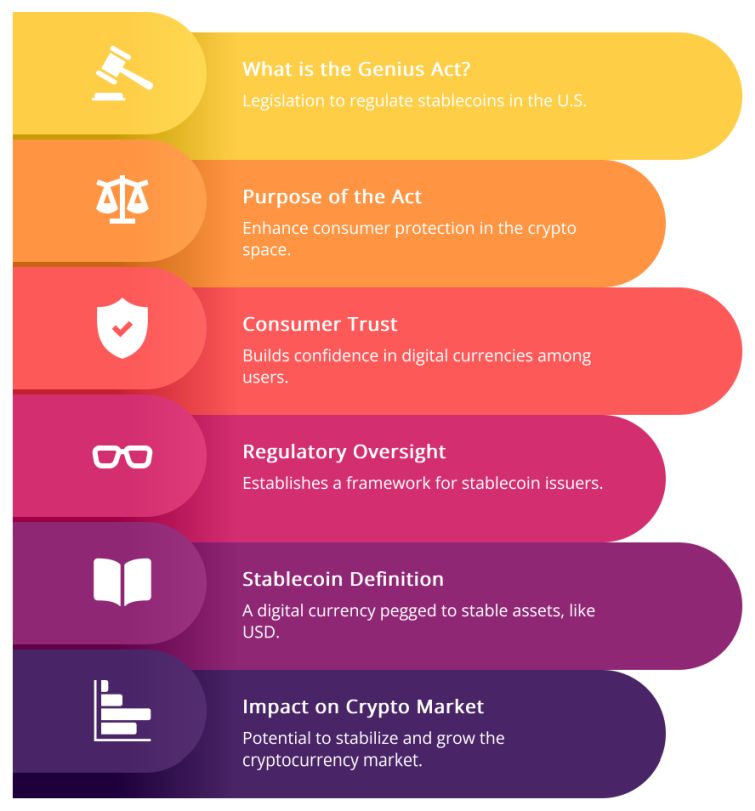
The United States financial landscape is witnessing a stirring controversy as US Banks raise alarms over the current Regulation of stablecoins under the GENIUS Act. This legislation, enacted to frame a robust regulatory environment for Digital Assets like “Stablecoins,” explicitly forbids issuers from directly paying interest to coin holders, a measure designed to protect the traditional banking sector’s deposit base. Yet, the rise of Yield-Generating stablecoins, indirectly providing returns through affiliated crypto exchanges, challenges the law’s spirit, stirring heated debate among financial institutions and regulators.
Since the GENIUS Act came into effect, it has marked a pioneering step towards legal clarity for stablecoins in the US market, fostering significant growth and innovation throughout the cryptocurrency ecosystem. However, this surge has exposed underlying tensions with traditional banking entities, particularly community banks that view yield-bearing stablecoins as an unfair challenge to their core deposit and lending functions. These banks argue that certain crypto platforms circumvent regulatory limits by enabling returns via affiliates, undermining Financial Compliance norms and potentially creating destabilizing market disparities.
US Banks Sound Alarm on Yield-Generating Stablecoins and GENIUS Act Loopholes
Community banks, prominently represented by the American Bankers Association’s advisory group, emphasize that the Legislation intends to prohibit any interest payments linked to stablecoins to safeguard local economic funding channels. Yet, the loophole allowing affiliated exchanges to offer indirect yields threatens to siphon off bank deposits, placing strain on traditional credit systems. This dynamic could escalate borrowing costs and restrict loan availability, further fueling banking concerns about the future of local economic resilience.

The Growing Challenge of Regulation in the Stablecoin Sphere
The GENIUS Act was a landmark regulatory breakthrough, aiming to cement the US dollar’s dominance in global digital payments. However, its effectiveness is questioned as stablecoin issuers exploit affiliate partnerships, often involving exchanges like Coinbase or Kraken, to fund yield payments indirectly. Critics stress that this circumvention not only breaches the regulatory framework but also tilts the market against banks that comply with strict deposit laws and FDIC insurance provisions.
US banks’ call to action is clear: they urge Congress to close this regulatory gap, extending the interest payment ban explicitly to affiliates and partners. Without such intervention, the concern is that stablecoin platforms could undermine deposit stability, disrupt credit flow, and in turn, weaken community-focused financial institutions essential for local business financing.
How Yield-Generating Stablecoins Compete with Traditional Banking
The innovation in stablecoins comes with a powerful incentive: the prospect of earning returns not available through conventional bank deposits due to regulatory constraints. This feature appeals directly to depositors seeking better yields in a low-interest environment. Nevertheless, it also heightens competition for deposits, compelling banks to reconsider their interest rate structures to retain customers, which could potentially result in increased costs for borrowers.
Moreover, the debate over Cryptocurrency regulation underscores a critical crossroads between fostering innovation and ensuring financial system stability. While stablecoins contribute to decentralizing finance, they must align with established regulatory goals to ensure protection for all stakeholders. This delicate balance remains under intense scrutiny as the ecosystem evolves in 2026.
The Wider Impact on the Financial Ecosystem and Local Communities
Community banks stress the broader economic risks tied to unchecked Yield-Generating stablecoins. Local enterprises depend heavily on traditional bank lending supported by stable deposit bases. As deposits migrate to crypto ecosystems offering better yields, smaller banks could see a shrinkage in their capacity to fund local businesses, potentially stunting economic growth in their regions.
This evolving scenario highlights the urgency for policymakers to deliver clear Legislation that reconciles innovation with economic stability. The dialogue among industry players, regulators, and lawmakers continues to be pivotal in shaping a balanced regulatory landscape that embraces the potential of stablecoins while safeguarding community financial health.
To stay ahead in understanding such dynamics affecting stablecoins and Cryptocurrency more broadly, explore the detailed analysis on how these digital assets impact deposit flows and credit systems in our article on stablecoin payments surge as well as the role of stablecoins in reducing market risk. Further insights on balancing traditional banking and innovative crypto finance are available in our content about DeFi basics for beginners and how blockchain evolves in major economies like France. For those starting in crypto, our guide to starting with cryptocurrency offers essential knowledge to navigate these shifts confidently.