
Decentralized prediction markets are shaking up the landscape of forecasting by harnessing the power of blockchain technology and crowdsourcing collective insights. Unlike traditional betting systems, these markets leverage smart contracts and cryptocurrency to create transparent, secure environments where users can speculate on future events ranging from political elections to economic trends. As more individuals join these platforms, the aggregated data produces real-time probabilities that are increasingly influencing how businesses, media, and investors anticipate what lies ahead.
In 2025, these innovative marketplaces have surged in popularity, boasting a weekly trading volume that exceeds $3 billion. Major players like Polymarket and Kalshi are no longer niche experiments but pivotal tools integrated into mainstream financial analysis and reporting. Yet, their rapid growth also raises pressing questions about regulation, reliability, and ethical use—a complex balance that will determine how decentralized prediction markets evolve in the near future.
Key highlights:
- Decentralized prediction markets use blockchain to enable secure and transparent futures trading on varied events.
- They aggregate user bets to create a collective forecast that rival traditional analytics in accuracy and speed.
- Platforms like Polymarket and Kalshi have attracted multi-billion-dollar valuations and partnerships with major financial entities.
- Legal uncertainties persist, especially in countries like France, where authorities actively restrict some platforms.
- Challenges such as oracle reliability and insider trading underscore the need for technological and regulatory advancements.
Understanding Decentralized Prediction Markets and Their Blockchain Backbone
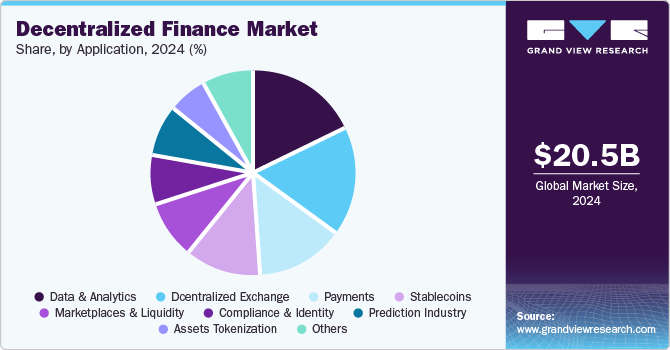
At their core, decentralized prediction markets transform speculation into a democratized and transparent process. Operating entirely on blockchain, these markets remove intermediaries by using smart contracts to execute trades and payouts automatically once outcomes are verified. This trustless setup ensures fairness and reduces manipulation, fostering confidence among participants who stake their cryptocurrency holdings to predict outcomes.
Users can wager on events as diverse as political elections, price movements of cryptocurrencies like Bitcoin, sports competitions, and even unexpected phenomena such as weather patterns or award outcomes. Each bet is represented by “shares” that fluctuate in real-time to reflect shifting market prediction probabilities, making the collective wisdom of the crowd immediately visible and actionable.
The Power of Smart Contracts and Oracles in Enabling Trust
Smart contracts are the backbone that enables these markets to function autonomously. They codify the rules—defining how outcomes are determined and how winnings are distributed—without human intervention. However, these automated contracts depend heavily on data accuracy provided by oracles, which feed external event results into the blockchain.
This connection between decentralized finance and real-world data is both a strength and a challenge. For example, disputes related to ambiguous event outcomes, such as celebrity appearances or subjective criteria, have exposed vulnerabilities where oracle decisions can significantly impact the market’s integrity. These incidents emphasize the need for robust oracle mechanisms to safeguard the market prediction ecosystem.
The Rise of Leading Platforms: Polymarket, Kalshi, Myriad, and Limitless
Among the pioneers reshaping collective forecasting, Polymarket has stood out as a trailblazer since its launch in 2020. Operating primarily with USDC and Bitcoin, its user-friendly interface brought current events-based betting to the blockchain realm. In 2025, Polymarket’s valuation soared to around $8 billion, supported by a huge $2 billion strategic investment from Intercontinental Exchange, the parent company of the NYSE. This partnership aims to globalize the distribution of Polymarket’s predictive data, amplifying its influence beyond crypto enthusiasts.
Kalshi, meanwhile, holds a unique position as a US-regulated platform, integrating blockchain technology on Solana to tokenize its markets. Its close collaborations with brokers like Robinhood and Webull enable an expanding user base to participate seamlessly in market prediction, with a valuation crossing $11 billion after a substantial one billion-dollar fundraising round. Kalshi’s emergence illustrates how regulation and blockchain innovation can intertwine to mainstream decentralized prediction markets.
Other noteworthy platforms include Myriad, focusing on gamification and wallet integration to enhance user engagement, and Limitless, which allows any participant to create prediction contracts on various blockchain networks. This open marketplace model has the potential to unleash unprecedented innovation, although it must overcome challenges such as oracle disagreements and dispute resolutions.
Legal and Ethical Challenges Facing Prediction Markets
The intersection of decentralized prediction markets with legal frameworks remains complicated. In France, for instance, the ANJ (Autorité Nationale des Jeux) actively blocks platforms like Polymarket, deeming them illegal gambling without official licensing. Despite technical workarounds like VPN use, accessibility remains restricted, illustrating the tug-of-war between emerging technologies and national laws.
Ethical dilemmas have also surfaced, highlighted by incidents such as the suspicion of insider trading linked to the Nobel Peace Prize anticipation on Polymarket in 2025. Sudden spikes in betting odds prior to official announcements have prompted investigations, revealing that while these markets provide remarkable insight through collective intelligence, they also open doors to potential abuses that traditional markets work hard to prevent.
The Future of Collective Forecasting Through Decentralized Markets
Decentralized prediction markets are poised to continue revolutionizing collective forecasting and futures trading by providing more democratic, transparent, and efficient mechanisms to anticipate global events. Their success hinges not only on technological innovations like enhanced blockchain oracles and smart contract evolution but also on navigating increasingly complex regulatory landscapes.
As these markets expand, their insights are already being integrated into mainstream financial platforms and media outlets, shaping how societies understand probabilities and risks. With growing volumes and user participation, decentralized prediction markets stand at the forefront of a new era where the power of crowdsourcing meets cutting-edge financial technologies, creating unprecedented opportunities for investors and curious minds alike.
For anyone eager to get involved, understanding these platforms provides a gateway to harnessing the predictive power of the crowd and exploring how cryptocurrency is transforming the future of forecasting.
Discover more on emerging crypto trends and how to navigate this dynamic landscape by visiting latest crypto movers.